





Introduction
You need money for your business. Two doors stand in front of you: the familiar one with the bank’s logo on it, and a smaller door labeled microfinance that you’ve heard about but never really understood. Which one do you walk through? This guide breaks down microfinance vs traditional loans so you can decide with confidence.

This is one of the most common questions in small business finance, and the honest answer is: it depends on who you are, how much you need, and how fast you need it. Comparing microfinance vs traditional loans isn’t about which one is “better” in some absolute sense — it’s about which one fits your situation.
In this guide, we’ll put both options side by side: how they work, what they cost, who qualifies, and when each one makes sense. By the end, you’ll know exactly which door is yours.
The Short Answer
If you’re short on time, here’s the quick version:
- Choose microfinance if you need a smaller amount (roughly $500–$50,000), you’re a startup or have limited credit history, you want a decision without months of paperwork, or a bank has already turned you down.
- Choose a traditional bank loan if you need a larger amount, you have solid credit and financial statements, you want the lowest possible interest rate, and you can wait several weeks for approval.
Now let’s dig into the details, because the differences go deeper than loan size.
What Counts as Microfinance?
Microfinance is a set of financial services built for people and tiny businesses that can’t easily access regular banks. The centerpiece is the microloan — a small loan, typically from a few hundred dollars up to about $50,000, offered by microfinance institutions (MFIs), nonprofit lenders, community development organizations, and government-backed programs like the SBA Microloan program.
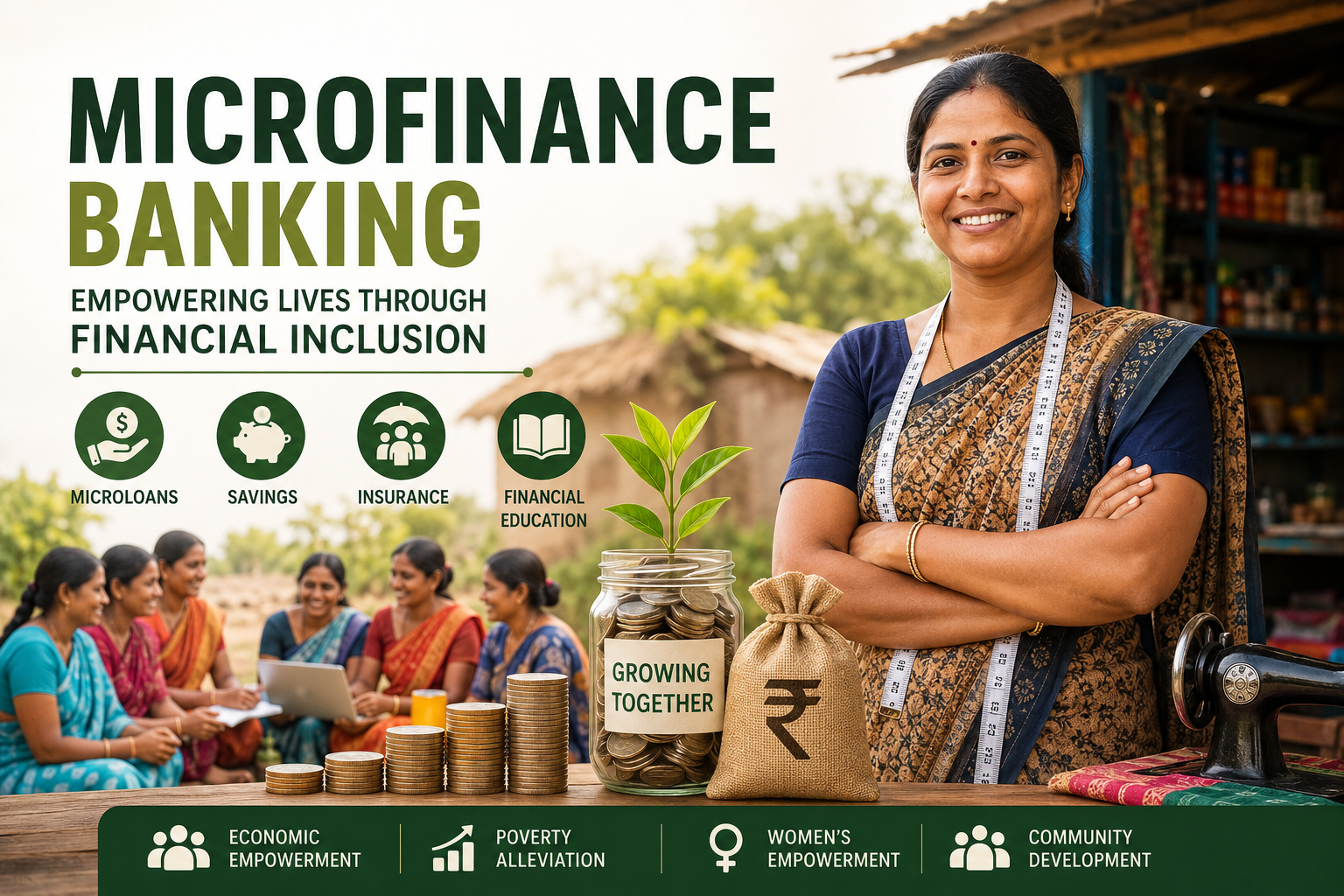
But microfinance is more than just loans. It usually comes bundled with things banks never offer: free business coaching, help with bookkeeping, financial literacy training, and sometimes even savings accounts and microinsurance. The whole model is built around a simple idea — that a $5,000 loan plus good guidance can change a family’s future.
Microlenders judge you differently, too. Instead of fixating on your credit score and collateral, they look at your character, your business idea, and whether your cash flow can handle the repayments.
What Counts as a Traditional Bank Loan?
A traditional bank loan is what most people picture when they think of borrowing: you apply at a bank or credit union, they pull your credit report, examine your financial statements and tax returns, appraise any collateral, and — after a thorough review — approve or decline you.
These loans shine at scale. Need $200,000 to open a second location? A bank is probably your only realistic option. Interest rates are typically the lowest you’ll find anywhere, especially if your credit is strong. Terms can stretch for many years, which keeps monthly payments manageable on large amounts.
The trade-off is the barrier to entry. Banks are careful with their money, and their requirements reflect that: good credit history, documented income, profitable operations or strong projections, and usually some form of collateral.
Head-to-Head Comparison
Let’s compare the two across the factors that actually matter when you’re deciding.
Loan Amounts
Microfinance loans are small by design — most fall between $500 and $50,000. That’s plenty for equipment, inventory, or working capital for a small operation, but it won’t fund a major expansion.
Traditional bank loans start where microfinance stops. Small business bank loans commonly range from $50,000 into the millions. If your project genuinely needs six figures, microfinance simply isn’t built for that.
Eligibility and Credit Requirements
This is where the two worlds diverge most sharply. Banks typically want a credit score of 670 or higher, at least two years of business history, and clean financial statements. Miss one of those and your application often dies on arrival.
Microlenders flip the script. Many accept credit scores in the 575–600 range, welcome brand-new startups with zero operating history, and some barely weigh credit scores at all. They care about who you are now and where your business is going, not about a rough patch three years ago.
Interest Rates and Total Cost
Here’s the uncomfortable truth about microfinance: it usually costs more. Because microlenders make small loans with labor-intensive, personal underwriting, their operating costs per dollar lent are high. Global average microfinance rates hover around 30–37% annually in many markets, though programs like the US SBA Microloan program are far cheaper at roughly 8–13%.
Traditional bank loans, for qualified borrowers, are almost always cheaper — often single-digit rates. But that cheap rate is only available if you can get through the door in the first place. An expensive loan you can actually get beats a cheap loan you can’t.
Speed of Approval
Need money next month? Microfinance is usually faster. Nonprofit microlenders often decide in two to six weeks; online microlenders can fund in days. The process is personal and relatively light on paperwork.
Banks move slowly by comparison. Between document gathering, underwriting, committee reviews, and compliance checks, six to twelve weeks is normal. If your opportunity has a deadline, that timeline can kill the deal.
Collateral
Banks love collateral — property, equipment, vehicles. For larger loans it’s often non-negotiable, and even smaller bank loans may require a personal guarantee that puts your assets on the line.
Microloans are frequently unsecured. Many microlenders ask for no collateral at all, relying instead on character assessment, group guarantees (where borrowers vouch for each other), or simply smaller loan sizes that limit the lender’s risk.
Support Beyond the Money
This one isn’t close. A bank gives you money and a repayment schedule. A good microlender gives you money plus a relationship: business plan reviews, bookkeeping help, mentoring check-ins, and training workshops. For a first-time borrower, that guidance can matter more than the interest rate.
When Microfinance Is the Better Choice
Microfinance wins clearly in these situations:
- You’re just starting out. No business history? No problem for most microlenders.
- Your credit is thin or bruised. Past mistakes don’t automatically disqualify you.
- You need under $50,000. The amounts line up perfectly with small business needs.
- A bank already said no. This is microlenders’ home turf — they exist for exactly this case.
- You want guidance, not just cash. The coaching that comes with many microloans is genuinely valuable.
Picture a home baker who needs $6,000 for a commercial oven. She has a 620 credit score and no business tax returns yet. A bank won’t look twice. A microlender will look at her farmers’ market sales records, taste her product, review her plan — and quite possibly say yes.
When a Traditional Bank Loan Wins
Banks are the right call when:
- You need a large amount. Six figures and up — microfinance can’t reach there.
- Your credit and financials are strong. If you qualify easily, take the cheapest money available.
- You want the lowest rate. On a big, long-term loan, even a few percentage points save thousands.
- You can wait. If there’s no deadline pressure, the bank’s slow process is just an inconvenience.
Picture an established restaurant owner with three profitable years, a 740 credit score, opening a second location for $180,000. She’ll get a bank rate that no microlender can touch, and the process — while slow — is routine for her.
Can You Use Both?
Absolutely, and smart borrowers often do — just at different stages. A common path: start with a microloan to launch or stabilize, build a repayment track record and formal financial statements, then graduate to bank financing for bigger moves. Each on-time microloan payment is a brick in the credit history that banks want to see.
Think of microfinance as the on-ramp and bank loans as the highway. You don’t have to choose one forever.

Frequently Asked Questions About Microfinance vs Traditional Loans
Is microfinance more expensive than a bank loan? Usually, yes. Microlenders have higher operating costs per dollar lent, so rates are typically higher than bank rates. Government-backed programs like SBA microloans are a notable exception, with rates around 8–13%.
Can I get a microloan with bad credit? In many cases, yes. Microlenders focus on your current income, business idea, and character rather than your credit score alone. Scores in the 575–600 range are commonly accepted.
How fast can I get each type of loan? Microloans: often two to six weeks, sometimes days through online lenders. Bank loans: typically six to twelve weeks.
Do microloans require collateral? Usually not. Most microloans are unsecured or use alternatives like group guarantees, which is a major advantage for borrowers without assets.
Which option helps my credit score more? Both help if the lender reports to credit bureaus — ask before you borrow. A successfully repaid microloan is one of the best ways to build the history banks look for.
Conclusion: Match the Loan to Your Moment
The microfinance vs traditional loans debate has no universal winner, but it does have a right answer for you right now. Ask yourself three questions:
How much do I need? Under $50,000 leans microfinance; well above it leans bank.
What does my financial profile look like? Thin credit or startup status points to microfinance; strong credit and history point to banks.
How fast do I need it? Urgent needs favor microlenders; patient timelines can handle banks.
And remember the bigger picture: these aren’t rival teams. Many successful businesses start with microfinance and grow into bank borrowing. The best loan is the one that fits your situation today and moves you toward a stronger financial position tomorrow. Before you apply anywhere, run the numbers on any loan calculator — knowing your real monthly payment turns a stressful decision into a confident one. Remember, there’s no single right answer in the microfinance vs traditional loans debate — only the right fit for you right now.



One thought on “Microfinance vs Traditional Bank Loans: Which One Is Right for You? (2026)”