



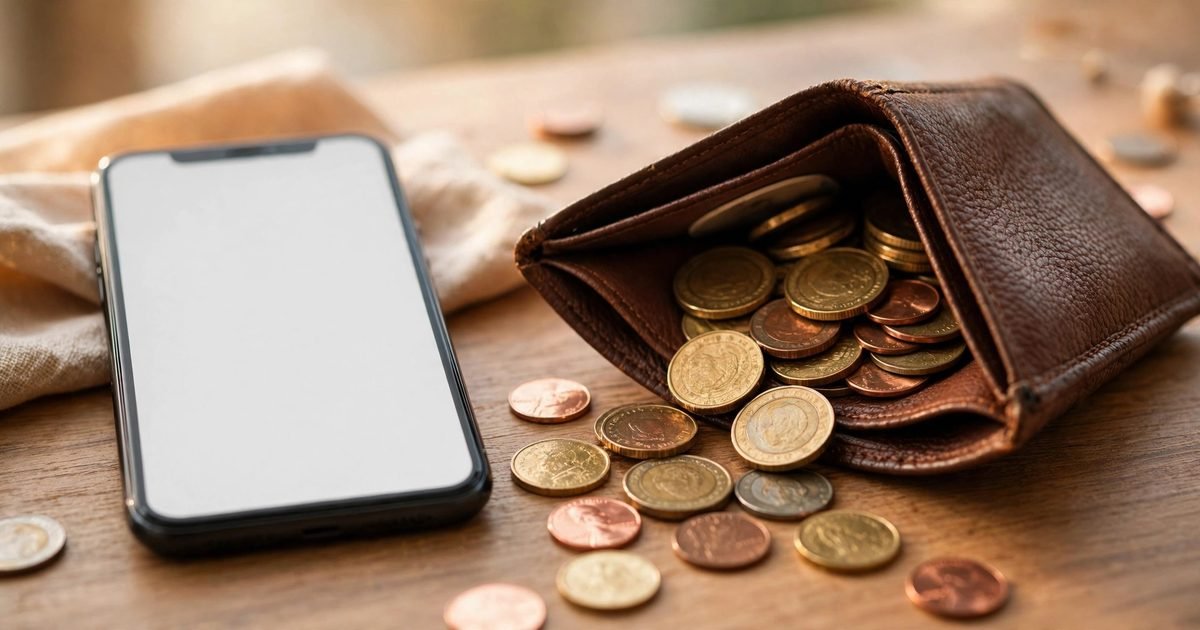
So, what is microsavings? Strip away the jargon and it’s beautifully simple: saving very small amounts of money, regularly, even when your income is irregular or tiny. We’re talking £1 here, £5 there — the kind of money most budgeting advice doesn’t even bother with. But for hundreds of millions of people worldwide, those tiny deposits are the difference between surviving a crisis and being destroyed by one. And honestly? Even if you’re comfortably middle-class in London or Chicago, the microsavings mindset can change how you think about money.
What Is Microsavings, Really?
Microsavings is the savings side of microfinance — financial services designed for people the traditional banking system ignores. While microcredit (small loans) gets most of the headlines, microsavings is arguably more powerful: it’s about building your own safety net, one coin at a time, instead of borrowing someone else’s.
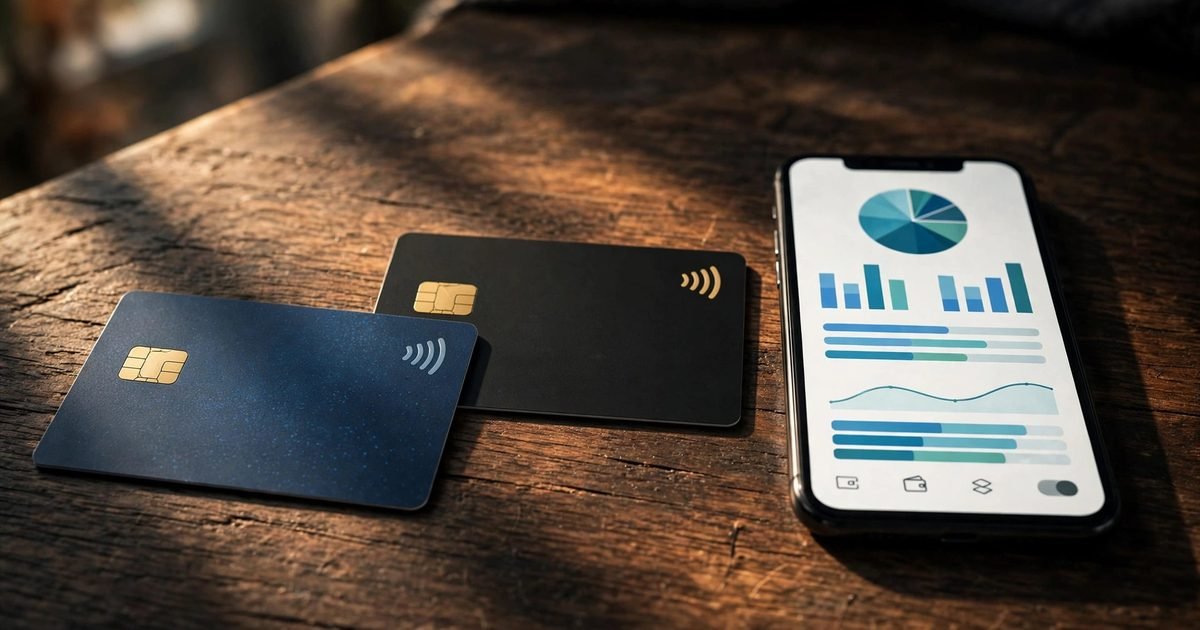
The core principles are simple. Deposits are tiny — there’s no minimum balance snobbery, no £1,000 opening requirement. They’re regular — weekly or even daily, matching how informal workers actually get paid. And they’re accessible — often through a mobile phone, a local agent, or a community group rather than a marble-floored bank branch. The idea is that saving shouldn’t require wealth; it should be the path to it.
Why does this matter? Because for a street vendor in Nairobi or a domestic worker in Mumbai, a single emergency — a sick child, a broken cart, a bad week of sales — can wipe out everything. Without savings, the only option is a moneylender charging 10% a month. With even a small savings cushion, that same emergency is survivable. That’s the whole game.
Who Actually Uses Microsavings?
The stereotype is that microsavings is only for the very poor in developing countries. The reality is broader and more interesting:
- Informal and gig workers. Around 2 billion people worldwide work informally — market traders, rickshaw drivers, day labourers, freelancers. They earn in cash, in lumps, unpredictably. Microsavings products are built around that rhythm: deposit when you earn, no penalties when you can’t.
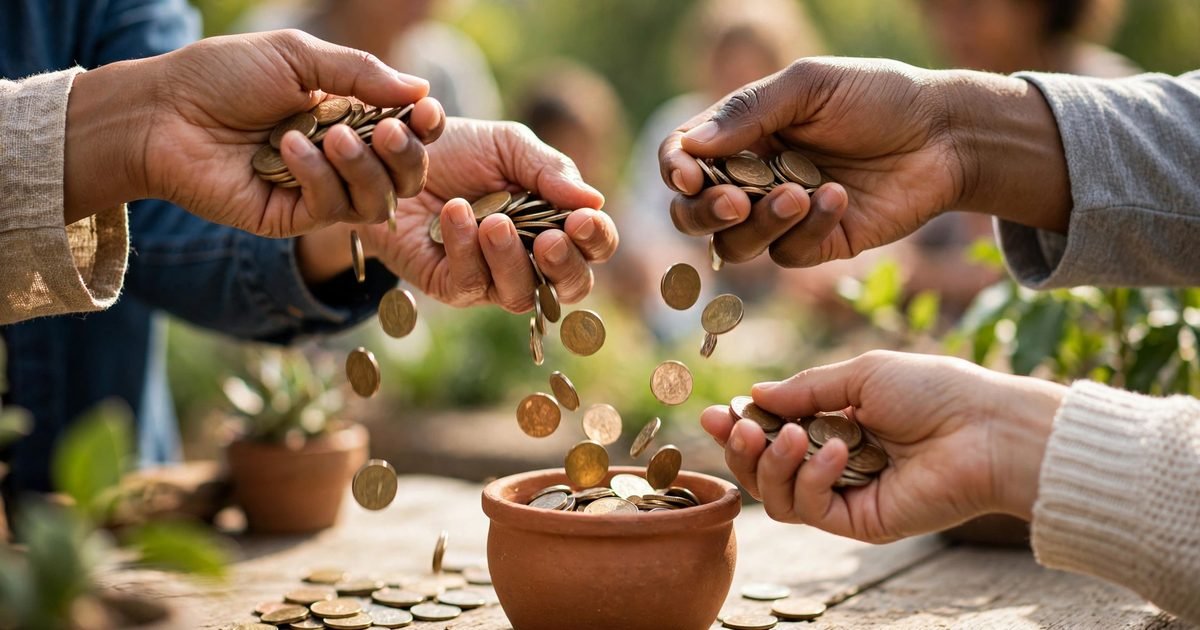
- Women’s savings groups. From India’s self-help groups (over 100 million members) to savings circles across Africa, women pool tiny contributions weekly. The group creates accountability — it’s much harder to skip your £2 deposit when fifteen neighbours are watching.
- Low-income households in rich countries too. Credit unions in the UK run “saver accounts” where members build savings alongside small loans. In the US, prize-linked savings accounts turn tiny deposits into lottery-style incentives. The need for small-scale saving isn’t a developing-world problem — it’s a human one.
- Young people starting out. Apps like Plum, Chip and Moneybox in the UK essentially automate microsavings — rounding up purchases or sweeping small amounts aside. Same principle, shinier packaging.
How Small Deposits Turn Into Big Gains
Let’s do the maths, because it’s more dramatic than you’d expect. Save just £2 a day — the price of a coffee you skip — and after one year you have £730. After five years, £3,650. That won’t buy a house, but it’s an emergency fund, a training course, or the stock for a small business.
Now add interest. Many microsavings products pay modest interest — say 3-5% a year. It sounds small, but remember our old friend compounding: £5 a week (£260 a year) at 4% grows to about £1,440 after five years instead of £1,300. The interest is a bonus; the real engine is the habit. Behavioural economists have shown that the act of saving regularly changes how people think about money — savers start planning ahead, negotiating better, and taking calculated risks like investing in their business, because they know they have a cushion.
And here’s the part most people miss: microsavings often unlocks everything else. A track record of regular deposits is proof of financial discipline — it’s how many microfinance institutions decide who’s ready for a first small loan. Your £2-a-week habit becomes your credit history.
Real-World Microsavings in Action
This isn’t theory. Some of the most successful financial products on earth are microsavings products:
- M-Pesa (Kenya). You’ve probably heard of it — the mobile money system that transformed Kenya. Its savings and loan features let users stash tiny amounts on their phones, earning interest on balances. Millions of Kenyans who’d never set foot in a bank now save digitally, and research links M-Pesa’s spread to measurable poverty reduction.
- Self-help groups (India). Groups of 10-20 women, usually in villages, each contribute as little as ₹10-50 (pennies) a week into a common pot. The pooled money is lent to members for emergencies or small enterprises, at interest decided by the group. India’s SHG movement now touches over 100 million households — it’s arguably the largest microsavings network in history.
- UK credit union saver accounts. Closer to home, credit unions across Britain offer accounts where you can save from £1 a week. Many pair saving with affordable borrowing — save while you repay a loan, so you finish the loan with savings in hand instead of nothing. It’s microsavings wearing a very British cardigan.
The pattern across all three? Meet people where they are, make deposits painless, and let the habit do the work.
How to Start Microsaving Today: 5 Practical Tips
You don’t need to live in Nairobi to use this. Here’s how to apply the microsavings playbook wherever you are:
- Start embarrassingly small. £1 a day. £5 a week. An amount so small you’d barely notice it. The goal in month one isn’t the money — it’s proving to yourself you can do it every single week.
- Automate it. Set up a standing order for the day after payday (or use a round-up app). Microsavings works because it’s frictionless — the moment saving requires willpower, it dies.
- Give it a name and a purpose. “Emergency cushion”, “Christmas without debt”, “course fees”. Named pots get raided far less often than anonymous ones — behavioural science backs this up.
- Join or build accountability. A savings buddy, a family challenge, a credit union — anything where someone else notices if you skip. The Indian SHG model works because of social pressure; borrow the trick.
- Increase gradually, never backwards. Got a pay rise? Bump the deposit by half the increase. Found £10 in an old coat? Into the pot. The rule: the amount only ever goes up.
Frequently Asked Questions
What is microsavings in simple terms?
Microsavings means saving small amounts of money on a regular basis — often just a few pounds or dollars a week — through products designed for people with low or irregular incomes. The focus is on building the saving habit and a safety net, not on getting rich quickly.
Is microsavings only for poor people?
No. While it was designed for low-income and unbanked people, the principles — tiny automatic deposits, named goals, social accountability — work for anyone. Plenty of UK and US savers use round-up apps and credit union accounts that are essentially microsavings products.
Do microsavings accounts pay interest?
Many do, though rates are usually modest (often 1-5% a year). Some community-based schemes pay no formal interest but return profits to members. The real return of microsavings is the accumulated cushion and the financial discipline it builds — interest is a welcome bonus.
What’s the difference between microsavings and microcredit?
Microsavings is about building your own money through small deposits; microcredit is about borrowing small loans. Savings-first approaches are generally safer — you earn a cushion instead of taking on debt — and many lenders actually require a savings track record before they’ll lend to you.
So, what is microsavings, in the end? It’s proof that wealth-building doesn’t start with wealth — it starts with a habit. A pound a day, a fiver a week, a coin in a jar: small, boring, relentless. Whether you’re a market trader in Kenya building your first safety net or a freelancer in Manchester finally getting your emergency fund together, the mechanism is identical. Start embarrassingly small, automate it, and let time do the rest. Your future self will thank you.