



The most effective cost of living budgeting tips UK households can follow boil down to one idea: build a budget around your real numbers, then hunt down the six overpriced bills that could hand you £1,486 a year back. The average UK household now spends around £3,106 a month — and on that scale, even a 5% trim is £155 a month back in your pocket.

Start with your real numbers, not guesses
Most budgeting advice fails because it starts with fantasy numbers. Yours won’t. Open your banking app and pull three months of actual spending — the contactless coffees, the Deliveroo, the subscriptions you forgot about.
Now sort everything into three buckets: fixed (rent or mortgage, council tax, insurance), variable essentials (groceries, transport, energy) and everything else. Don’t judge the “everything else” bucket yet — it usually holds 10–20% of your money, and that’s where your savings live.
Your budget is only as honest as your starting data. If you tell yourself you spend £200 a month on groceries but it’s really £340, every plan will fail by week three. Three months of real numbers, then you plan.
The 50/30/20 split, rebuilt for tight budgets
You’ve probably heard of 50/30/20 — 50% needs, 30% wants, 20% savings. But when your monthly spend is hovering near £3,106, that neat split can feel like a fantasy. So adapt it.
Try 55/25/20 instead: 55% for needs, 25% for wants, 20% for savings and debt overpayments. Can’t hit 20%? Start with 5% — £155 a month — and grow it every quarter. The system matters more than the starting percentage.
And here’s the non-negotiable part: pay yourself first. Move the savings amount out on payday, before a single bill gets paid. If savings wait for “what’s left over,” the answer is always nothing.
Cost of living budgeting tips UK families swear by: the six switches worth £1,486
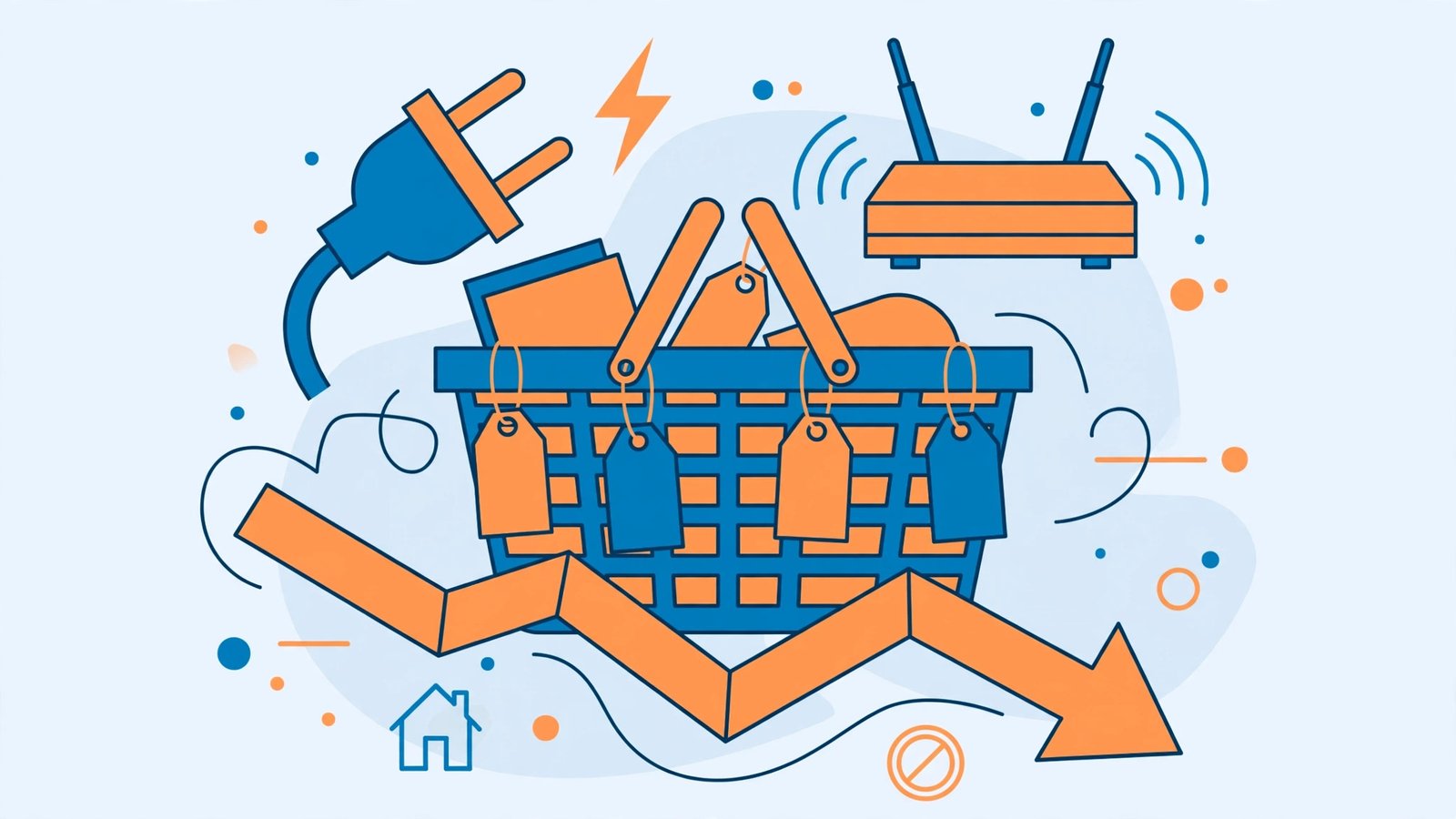
Now for the centrepiece. While everyone’s arguing about cutting lattes, smart UK households quietly switched the bills that were silently overcharging them. Add these up:
- Energy — £264 a year. If you haven’t switched tariff since prices moved, you’re probably on a poor deal. Compare on an Ofgem-accredited comparison site — most switches complete in under three weeks.
- Broadband — £276 a year. Out of contract? You’re paying loyalty tax. Switch to a faster deal with a new-customer discount; the new provider usually handles the transfer.
- Mobile — £240 a year. A SIM-only deal can cost £6–£10 a month versus £30+ on a bundled handset contract once the phone is paid off. Check your contract end date today.
- Savings interest — £350 a year. Money sitting in a 0.5% account while top easy-access accounts pay far more is a silent leak. On a £10,000 emergency fund, the difference is hundreds a year.
- Bank switch bonus — £200. UK banks regularly pay £175–£200 cash to switch your current account through the Current Account Switch Service. Your direct debits move automatically.
- TV and streaming — £156 a year. If you’re paying for three streaming services and watch one, that’s £156+ a year leaking away. Keep one, rotate the rest.
That’s £1,486 a year — £124 a month — from six switches, most of them done in an afternoon. No lifestyle sacrifice. This is why the best cost of living budgeting tips UK experts share always start with the bills you already pay, not the treats you’d rather keep.
Weekly money check-ins keep the system alive
A budget you write once in January is dead by March. The fix is a ten-minute weekly money check-in — Sunday evening, phone in hand, banking app open. Three questions only: what came in, what went out, and what’s different this week?
Pair that with a budgeting app that categorises spending automatically. The app does the counting; you do the decisions. One family I know caught a £22.99 monthly subscription they’d never used, running for eleven months — £253 the app found in seconds.
Close the loop: where your £1,486 goes
Savings that sit in your current account get spent. That’s not a character flaw — it’s how brains work. So give your freed-up £124 a month a job before you feel it.
Step one: build the emergency fund. One month’s essential spending — roughly £1,700–£2,000 for most UK households — sitting in a top-paying easy-access account. At £124 a month from the six switches alone, you’re there in about 15 months.
Step two: attack expensive debt. If you carry a credit card balance at 25% APR, a £124 monthly overpayment clears a £1,000 balance in under nine months instead of letting interest drag it on for years. Overpaying debt at high interest beats almost every savings rate.
Step three: grow the future. Once the emergency fund is set and the expensive debt is gone, that same £124 feeds a stocks-and-shares ISA or a pension top-up. A budget isn’t a punishment — it’s a machine that turns today’s attention into tomorrow’s options.
FAQs
What are the best cost of living budgeting tips UK households can start this week?
The fastest wins are switching energy and broadband deals, moving to a SIM-only mobile plan, and doing a ten-minute subscription audit. Most UK households can save £1,486 a year from six switches alone. Start with a weekly money check-in so you can see exactly where your £3,106 monthly spend actually goes.
How much should I save each month on an average UK budget?
Aim for 20% of your income for savings and debt overpayments, but start where you can — even 5% of a £3,106 monthly budget is £155 a month, or £1,860 a year. Pay yourself first on payday so the savings happen automatically. Increase the percentage a little each quarter until you reach 20%.
How do I build an emergency fund while costs are rising?
Ring-fence one month’s essential spending — about £1,700–£2,000 for the average UK household — in a top-paying easy-access savings account. Funding it with the £124 a month from bill-switching gets you there in roughly 15 months without touching the rest of your budget. Keep the emergency fund separate from everyday money.
Should I overpay my mortgage or credit card first?
Always clear high-interest debt first. Overpaying a 25% APR credit card balance saves far more than overpaying a 5% mortgage, because the interest cost is so much higher. Once expensive unsecured debt is gone, redirect that monthly overpayment to your mortgage or long-term savings instead.
Do budgeting apps actually help, or are spreadsheets better?
Budgeting apps help because they categorise spending automatically and flag problems in real time, while spreadsheets rely on you remembering to update them. The best approach is an app for tracking plus a ten-minute weekly check-in for decisions. Either way, use three months of real spending data as your starting point.
Budgeting through a cost of living squeeze isn’t about being miserable — it’s about being deliberate. Get your real numbers, run the six switches, pay yourself first, and let £1,486 a year of freed-up money build the emergency fund that makes everything else calmer. Start with one switch tonight.
The fastest wins are switching energy and broadband deals, moving to a SIM-only mobile plan, and doing a ten-minute subscription audit. Most UK households can save £1,486 a year from six switches alone. Start with a weekly money check-in so you can see exactly where your £3,106 monthly spend actually goes.
Aim for 20% of your income for savings and debt overpayments, but start where you can — even 5% of a £3,106 monthly budget is £155 a month, or £1,860 a year. Pay yourself first on payday so the savings happen automatically. Increase the percentage a little each quarter until you reach 20%.
Ring-fence one month’s essential spending — about £1,700–£2,000 for the average UK household — in a top-paying easy-access savings account. Funding it with the £124 a month from bill-switching gets you there in roughly 15 months without touching the rest of your budget. Keep the emergency fund separate from everyday money.
Always clear high-interest debt first. Overpaying a 25% APR credit card balance saves far more than overpaying a 5% mortgage, because the interest cost is so much higher. Once expensive unsecured debt is gone, redirect that monthly overpayment to your mortgage or long-term savings instead.
Budgeting apps help because they categorise spending automatically and flag problems in real time, while spreadsheets rely on you remembering to update them. The best approach is an app for tracking plus a ten-minute weekly check-in for decisions. Either way, use three months of real spending data as your starting point.