






Neither is objectively “best” — it depends on when you need the money. Cash ISA vs stocks and shares ISA comes down to this: cash for anything you’ll spend within five years, investing for anything beyond. With a £12,000 cap on cash ISAs coming in April 2027, this is your last tax year to shelter a full £20,000 in cash.

Cash ISA vs stocks and shares ISA: the honest answer by age and horizon
Forget the tribal debates: your answer is a maths problem, not a loyalty test. If you need the money soon — a house deposit in three years, a car next spring — put it in a cash ISA. Markets can fall 20% in a bad year, and there’s no recovery window when your deadline is fixed.
If you won’t touch the money for five years or more, the picture flips. Over long stretches, stock markets have historically beaten cash savings comfortably — making the stocks and shares ISA the obvious home for retirement money and long-term wealth building, provided you can leave it alone when headlines turn ugly.
Your tax band matters too. Basic-rate taxpayers lose 20% of interest above the £1,000 personal savings allowance; higher-rate taxpayers get just £500 tax-free. That makes sheltering cash in an ISA genuinely valuable for anyone with a decent savings pot — especially with best-buy rates still hovering in the 4–5% range this autumn.
The April 2027 £12,000 cash ISA cap: what it actually changes
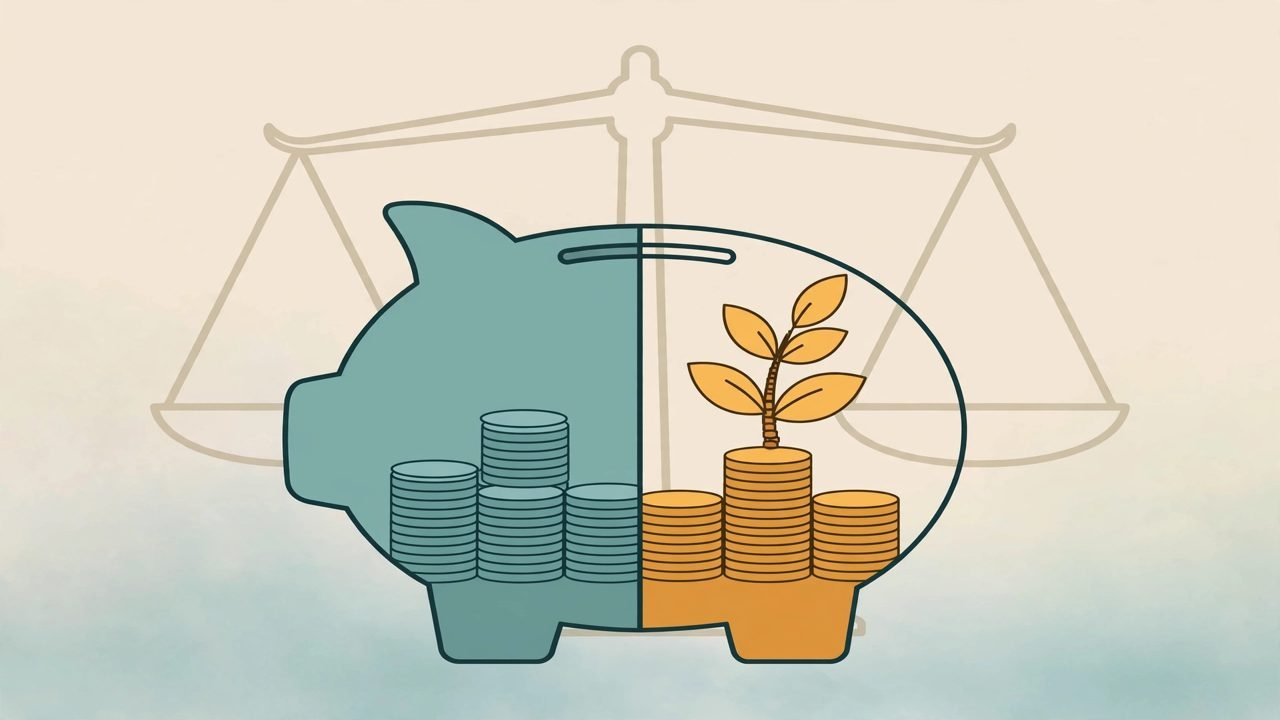
From April 2027, cash ISA contributions are expected to be capped at £12,000 a year, while the overall £20,000 ISA allowance stays put. In plain terms: only £12,000 of it can sit in cash; the rest has to go into investments to stay tax-sheltered.
That’s why 2026/27 is the decision year. Anything sheltered in a cash ISA now stays tax-free forever — interest keeps compounding without a penny of tax. If you’ll want a large cash buffer (a business reserve, school fees, a property purchase), front-loading cash ISA contributions this tax year is the smart move.
Not everyone will feel the cap. Save under £12,000 a year in cash and April 2027 changes nothing for you. But drip-feed £1,500 a month into an easy-access cash ISA and you’ll hit the ceiling by December — the overflow then needs a new home: a stocks and shares ISA, pension top-ups, or a taxable savings account.
October 2026: cash rates vs market returns in plain numbers
Best-buy cash ISAs are paying around 4% to 4.7% this month, depending on instant access versus a one-year lock-in. On £20,000, that’s roughly £800–£940 a year in completely tax-free interest — a genuinely decent return for money you need safe and soon.
Stocks and shares ISAs have no advertised rate — which is the risk. A globally diversified fund might average 7–8% a year over decades, but your first year could equally be minus 15%. The trick isn’t picking the perfect fund; it’s matching the money to a horizon long enough to ride out the bad years.
Who should pick which: three worked examples
Priya, 28, saving for a flat in two years. She needs £30,000 for a deposit and has £18,000 saved. Every penny belongs in a cash ISA — ideally using the full £20,000 allowance this tax year before the cap arrives. Investing house-deposit money on a two-year horizon is gambling, full stop.
Mark, 45, higher-rate taxpayer with an emergency fund sorted. His three-month buffer sits in an easy-access cash ISA; the rest goes into a stocks and shares ISA via monthly payments into low-cost global index funds. His higher tax band and 20-year horizon make the ISA wrapper doubly valuable.
Linda, 61, approaching retirement in four years. She splits it: this year’s full £20,000 cash allowance for near-term spending, her stocks and shares ISA left invested for the years beyond 70. The closer the goal, the more cash wins — that’s the rule of thumb.
Notice what none of them did? Put everything in one place. The cash ISA vs stocks and shares ISA question almost always has a third answer: use both, weighted by when each pound will be spent.
FAQs
Cash ISA vs stocks and shares ISA: which is safer for my money?
Cash ISAs are safer because your balance never falls and deposits are protected up to £85,000 by the FSCS. Stocks and shares ISAs can lose value when markets fall, though they historically grow more over periods of five years or longer. Safety and growth are a trade-off, not a package deal.
Will the new £12,000 cash ISA cap affect my existing savings?
No. The £12,000 cap expected from April 2027 applies only to new contributions from that tax year onward. Money already inside a cash ISA keeps its tax-free status, and the interest it earns remains completely free of income tax. Only your future annual contributions face the lower limit.
Can I hold both a cash ISA and a stocks and shares ISA in the same tax year?
Yes. You can split your £20,000 annual ISA allowance across multiple ISA types in the same tax year — for example, £12,000 in a cash ISA and £8,000 in a stocks and shares ISA. You can also hold ISAs with different providers, as long as your total contributions stay within £20,000.
How long should I keep money in a stocks and shares ISA before touching it?
Five years is the widely accepted minimum for a stocks and shares ISA. Stock markets move in cycles, and five years gives most portfolios a reasonable chance to recover from a downturn. If your deadline is sooner — a house purchase in two years, for instance — a cash ISA is the safer choice.
What happens to my ISA allowance if I don’t use it all by 5 April 2027?
It disappears. ISA allowances can’t be carried forward — use them by 5 April or lose them. That’s why this year’s allowance matters more than usual: it’s the last chance to shelter the full £20,000 in cash before the expected £12,000 cash ISA cap takes effect in April 2027.
The cash ISA vs stocks and shares ISA debate will run forever, but your personal answer is simpler than the internet makes it sound. Match the vehicle to the timeline: cash for the next five years, investments for everything after, and this year’s full £20,000 allowance grabbed while the grabbing’s good. Get that split right and the cap in April 2027 becomes someone else’s problem.
Cash ISAs are safer because your balance never falls and deposits are protected up to £85,000 by the FSCS. Stocks and shares ISAs can lose value when markets fall, though they historically grow more over periods of five years or longer. Safety and growth are a trade-off, not a package deal.
No. The £12,000 cap expected from April 2027 applies only to new contributions from that tax year onward. Money already inside a cash ISA keeps its tax-free status, and the interest it earns remains completely free of income tax. Only your future annual contributions face the lower limit.
Yes. You can split your £20,000 annual ISA allowance across multiple ISA types in the same tax year — for example, £12,000 in a cash ISA and £8,000 in a stocks and shares ISA. You can also hold ISAs with different providers, as long as your total contributions stay within £20,000.
Five years is the widely accepted minimum for a stocks and shares ISA. Stock markets move in cycles, and five years gives most portfolios a reasonable chance to recover from a downturn. If your deadline is sooner — a house purchase in two years, for instance — a cash ISA is the safer choice.
It disappears. ISA allowances can’t be carried forward — use them by 5 April or lose them. That’s why this year’s allowance matters more than usual: it’s the last chance to shelter the full £20,000 in cash before the expected £12,000 cash ISA cap takes effect in April 2027.



One thought on “Cash ISA vs Stocks and Shares ISA: Which Is Best? (2026)”