





Picture this: a baker in Ohio needs $2,500 for a second oven, and instead of a bank saying no, 80 strangers from London, Berlin and Austin chip in $25 each. That’s Kiva in a nutshell. If you’ve ever wondered about Kiva loans how it works, you’ve probably seen it described as “crowdfunded microloans” — but what does that mean in practice? Who puts up the money, do borrowers pay interest, and could you actually get one? Let’s walk through it, because Kiva is one of the most interesting alternatives to traditional borrowing — especially for people banks usually turn away.

Kiva loans how it works: the six steps
Kiva is a non-profit platform connecting borrowers with ordinary people willing to lend small amounts. No bank in the middle, no credit scoring algorithm, and — the surprise for most people — no interest charged to the borrower on direct loans.
Step 1: The borrower applies. Say Maria in Florida runs a food truck and needs $6,000 for a generator and signage. She applies on Kiva’s site, describing her business and the loan’s purpose. No credit check, no collateral.
Step 2: A trustee endorses her. A local organisation, community group or friend publicly vouches that Maria is legitimate and can repay. No trustee, no loan.
Step 3: Private fundraising. Maria gets a private window (around 15 to 30 days) to invite friends, family and customers to lend first. If her own circle won’t back her, the crowd probably won’t either.
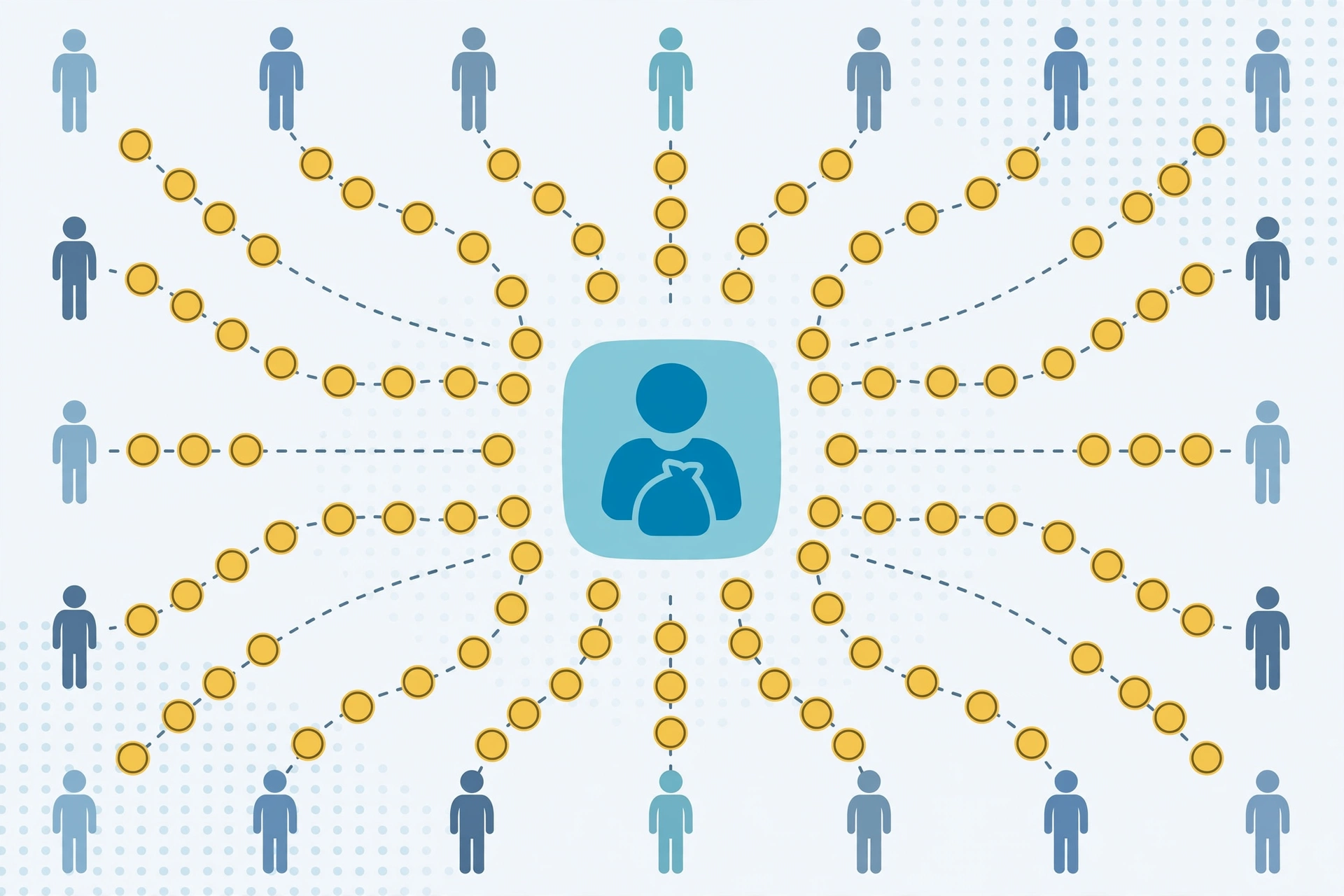
Step 4: The campaign goes public. Her profile goes live, and thousands of lenders browse for projects that speak to them — someone in Manchester might lend $25, a retiree in Dublin $50. The loan fills up in small chunks.
Step 5: Maria gets the money — at 0% interest. Once fully funded, the cash is disbursed. Kiva keeps none of it; it runs on optional lender donations and grants.
Step 6: Repayment, then relending. Maria repays monthly over up to three years, and every repayment goes straight back to lenders as credit. Most lend it out again — one $25 loan can fund business after business for years.
How Kiva Differs From Traditional Microloans
Traditional microfinance institutions charge borrowers interest — sometimes high — to cover costs and risk. This is where the Kiva loans how it works model genuinely stands apart: lenders on Kiva earn no interest at all. They lend to help, not to profit.
- Who decides: a bank or microfinance institution approves or rejects you; on Kiva, the crowd decides.
- What matters: traditional lenders want credit history and collateral; Kiva looks at your story, your plan and your trustee’s endorsement.
- The cost: direct Kiva borrowers pay 0% interest and no fees, while traditional microloans carry interest and UK/US bank small-business loans run 6% to over 20% APR.
- The relationship: Kiva lenders follow your progress and cheer you on. A bank just wants its direct debit on time.
One caveat: Kiva’s international loans go through local field partners, who can charge borrowers interest to cover their costs. The 0% figure applies to direct Kiva loans.
The Pros and Cons for Borrowers
The pros
- Zero interest, zero fees on direct loans — you repay exactly what you borrowed.
- No credit check and no collateral. A patchy credit history won’t sink you, and you won’t risk your home or equipment.
- Free publicity. Hundreds of lenders see your profile, and many borrowers pick up customers this way.
- Flexible amounts. Loans go up to $15,000 — a sweet spot for equipment, stock or a first expansion.
The cons
- It’s slow. Endorsement, private fundraising and the public campaign can take weeks or months. Need cash by Friday? This isn’t it.
- Nothing is guaranteed. If the crowd doesn’t bite, an underfunded campaign means no money at all.
- You must sell your story. Writing a compelling profile and rallying your network takes real effort.
- Geographic limits. Direct 0% loans are primarily for US borrowers; in the UK or Europe you can lend, but borrowing is harder.
Who Qualifies for a Kiva Loan?
The bar is low, but it exists. For a direct Kiva loan you generally need to be over 18, US-based, running a real business or social enterprise (even a tiny one), and — critically — a trustee willing to endorse you publicly, such as a community organisation, faith group or business association.
There’s no minimum credit score or revenue threshold. A freelance designer in Chicago needing a laptop, a refugee-owned catering startup in Texas — those are the profiles Kiva was built for, including programmes for women entrepreneurs and people rebuilding after financial hardship.
Outside the US, Kiva works through local field partners, and you apply through the partner directly. UK and European readers are hugely welcome as lenders: you can fund borrowers worldwide from about £25.
Frequently Asked Questions
Do Kiva lenders really get no interest?
Really. Lenders are motivated by impact, not profit — when the borrower repays, they get their original amount back as credit and usually lend it again. Kiva covers its costs through optional donations, not by skimming repayments.
What happens if a borrower can’t repay?
Defaults happen, though repayment rates have historically been around 96%. If a borrower falls behind, lenders may lose part of their loan — which is why spreading money across several borrowers is smart. And since Kiva loans how it works relies on trust rather than guarantees, the trustee system matters enormously.
Is Kiva better than a bank loan for a small business?
For the right person, yes — 0% interest with no credit check is unbeatable. But banks are faster and offer larger amounts. Kiva suits modest needs: equipment, stock, a website rebuild. If you need $100,000 tomorrow, talk to a bank.
Can I use Kiva if I’m in the UK?
As a lender, absolutely — start from about £25. As a borrower, direct Kiva loans are currently US-focused, so a UK owner would more likely use UK community development finance institutions.
Conclusion
Now that you know Kiva loans how it works, the appeal is obvious: real people funding real businesses at zero interest, with trust doing the job credit scores usually do. It isn’t fast and it isn’t guaranteed — but for borrowers locked out of traditional finance, and for lenders who’d rather fund a food truck than buy another gadget, it’s one of the most human ideas in modern finance. Kiva proves money doesn’t always need a bank to do good work.