




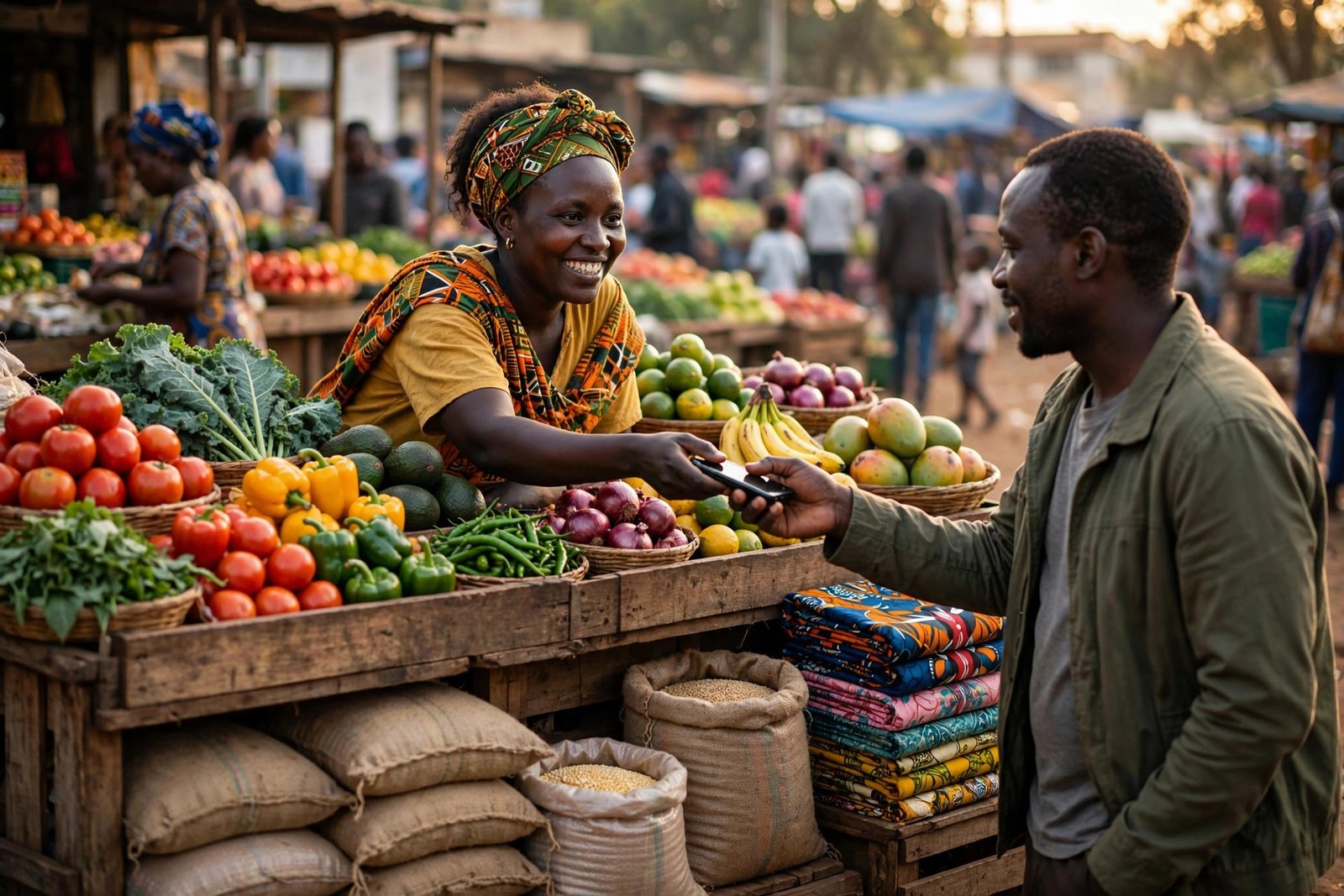
Picture this: it’s 2007 in Nairobi, and a woman named Amina needs to send money to her mother in a village five hours away. She has no bank account. The nearest bank is a day’s trip. Her options? A long, expensive bus ride, or handing cash to a stranger on a minibus and praying it arrives. Then her phone buzzes. A simple text message has changed everything. That’s mobile money explained in a single moment — real value, moving on a phone, no bank required.
Today, mobile money accounts for over a billion registered accounts worldwide. It’s not a fancy banking app for the already-wealthy. It’s a financial lifeline built for people the traditional banking system left behind. But how does it actually work? Who are the agents you keep hearing about? And is it better than a regular bank account? Let’s get into it.
How Does Mobile Money Actually Work?
At its core, mobile money is beautifully simple. Your phone number becomes your account number. You hand cash to a local agent, and they convert it into digital value — called e-money — stored in your mobile wallet. Want cash back out? Visit another agent and convert it the other way. That’s the entire cycle: cash in, digital balance, cash out.
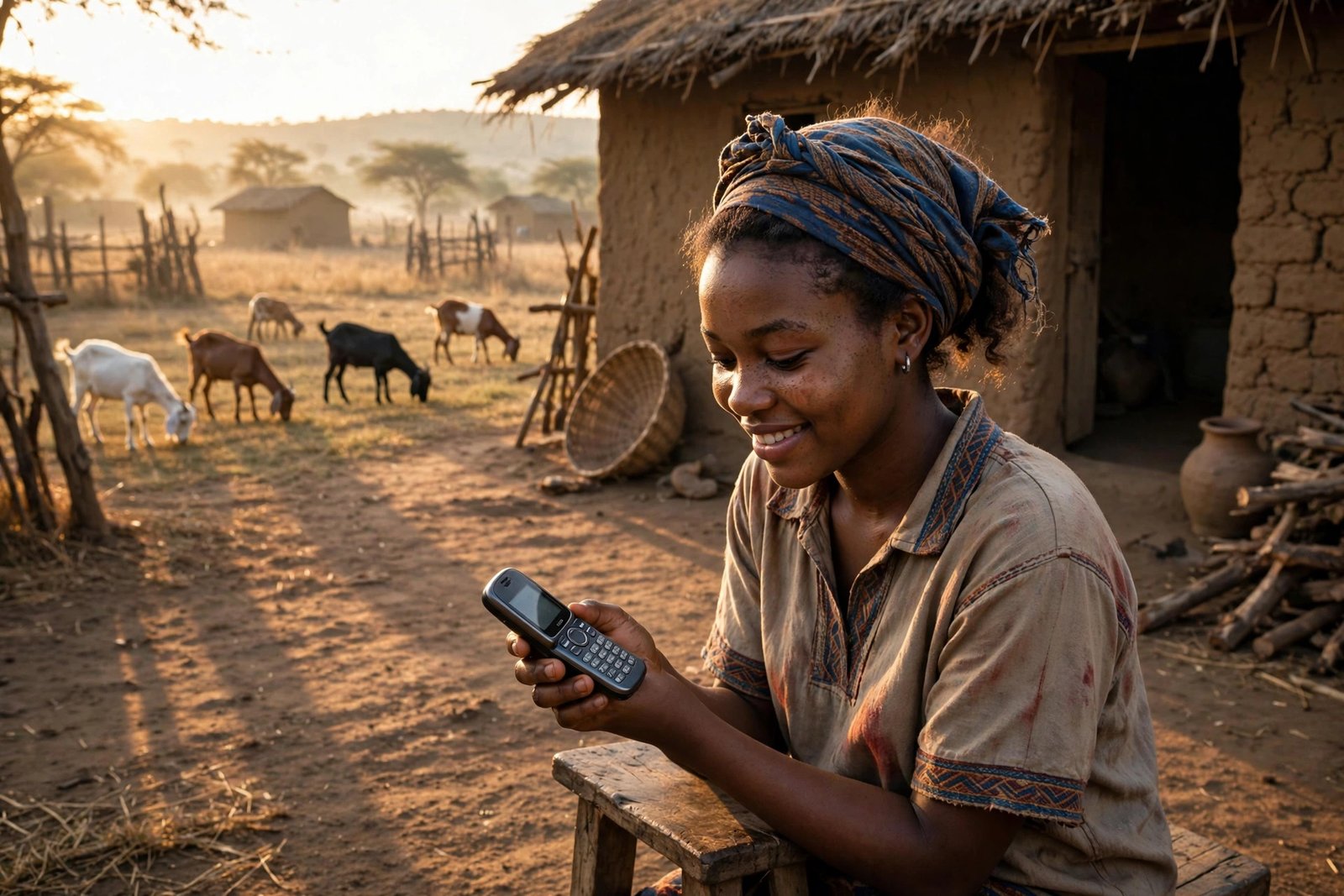
You don’t need a smartphone, by the way. That’s the genius of it. Most mobile money runs on basic feature phones using USSD codes (those short *123# menus) or simple SMS. No internet required. In rural areas where 3G is a rumor, a $20 handset is a fully functional bank branch.
- Register: Show your ID at an agent or mobile shop and link your SIM to a wallet.
- Cash in: Give the agent physical money; they load the same value onto your phone.
- Transact: Send money, pay bills, buy airtime, or save — all from your phone.
- Cash out: Visit any agent, show your ID, withdraw cash from your balance.
The M-Pesa Story: Kenya’s Fintech Revolution
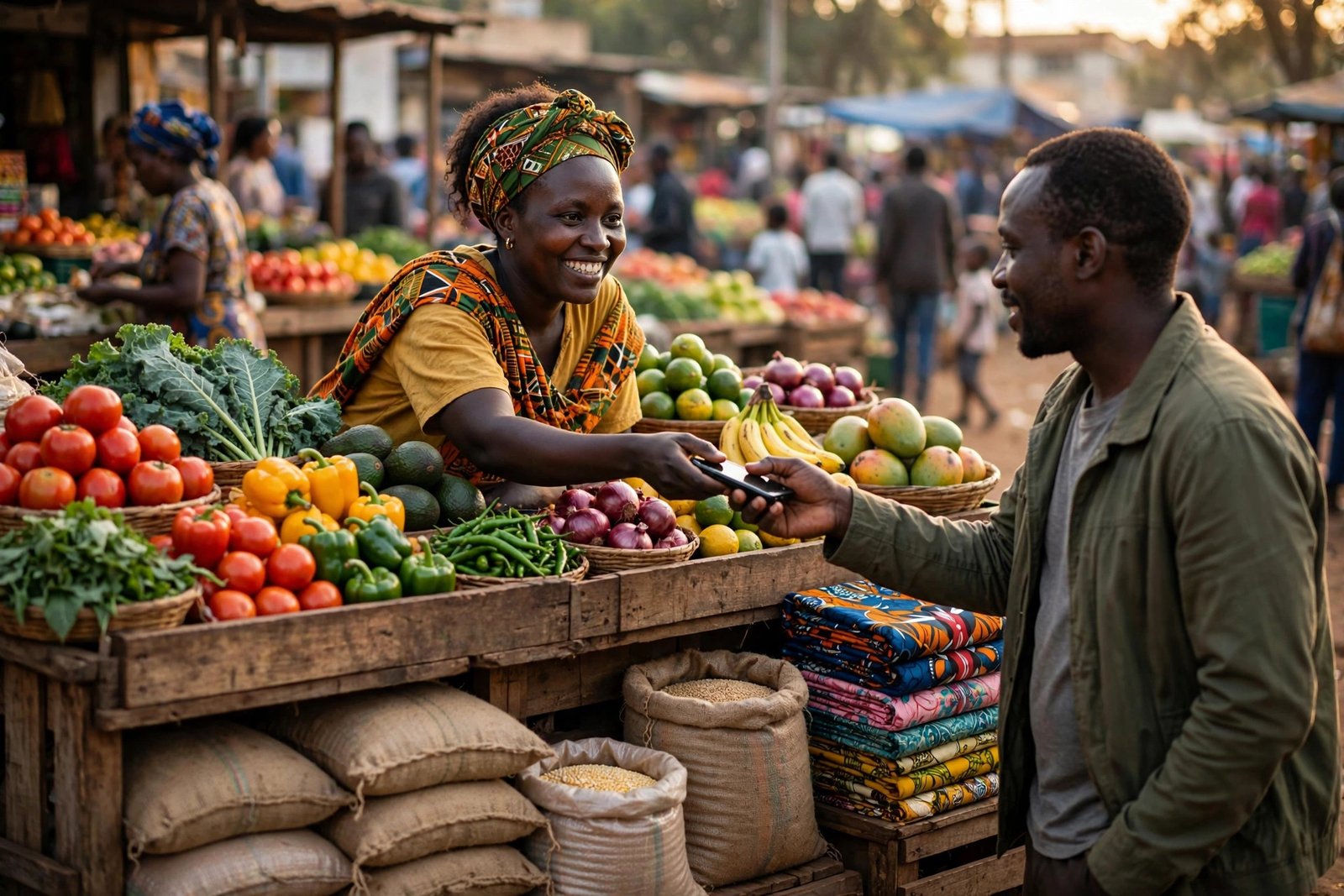
You can’t talk about mobile money without talking about M-Pesa. Launched in 2007 by Safaricom in Kenya, M-Pesa (“M” for mobile, “pesa” the Swahili word for money) started as a modest experiment. The original idea? Help microfinance borrowers repay loans by phone. Cute concept — but users had bigger plans. They started sending money to each other, buying airtime, paying shopkeepers.
Safaricom noticed and pivoted fast. Within a year, M-Pesa had over a million users. Today it’s woven into daily life across Kenya and beyond — people pay school fees, receive salaries, and run entire businesses through it. Studies suggest M-Pesa lifted roughly 2% of Kenyan households out of extreme poverty by giving women, in particular, a safe place to store money and the freedom to switch to retail work.
Why Did M-Pesa Succeed Where Banks Failed?
Three reasons, really. First, reach: Safaricom’s agent network put a “branch” within walking distance of almost everyone, while banks clustered in cities. Second, simplicity: no minimum balance, no intimidating paperwork, no confusing fee schedules. Third, trust: the agent on your street corner is your neighbor. You know where he lives. Try saying that about a call center.
Agents: The Human Backbone of the System
Here’s a question worth asking: if mobile money is digital, why does it need physical shops at all? Because the economy is still mostly cash. Agents are the bridges between the physical and digital worlds. They’re small shopkeepers, kiosks, and corner stores licensed to convert cash to e-money and back.
Agents earn a small commission on each transaction, which is why the network grows itself. A village shopkeeper who signs up as an agent gets extra foot traffic and a new income stream. The more agents there are, the more convenient the system becomes, which attracts more users, which attracts more agents. It’s a classic network effect — and it’s the main reason mobile money succeeded in East Africa while similar ideas fizzled elsewhere.
Of course, agents aren’t perfect. They occasionally run out of “float” (cash on hand or e-money balance), leaving customers waiting. And agent fraud — where a dishonest operator skims balances — remains a real risk, which is why keeping your PIN secret is drilled into every new user from day one.
Beyond M-Pesa: bKash, MTN, and the Global Boom
Kenya was the spark, not the ceiling. Bangladesh’s bKash now serves tens of millions of users, many of them garment workers sending wages home to rural families. MTN Mobile Money spans countries across Africa from Ghana to Uganda. In Ghana alone, mobile money transaction values regularly exceed the country’s GDP — that’s how deeply it’s embedded in daily commerce.
And it’s not just transfers anymore. Modern mobile money platforms offer:
- Savings accounts — like M-Pesa’s M-Shwari, which pays interest on tiny balances.
- Micro-loans — small loans approved in minutes based on your transaction history, no collateral needed.
- Merchant payments — pay at shops by entering a till number, no card terminal required.
- International remittances — diaspora workers sending money home directly to a mobile wallet, often cheaper than traditional wire services.
Mobile Money vs. Traditional Banks: The Honest Comparison
So is mobile money actually better than a bank? It depends entirely on who you ask — and what they need. Let’s be honest about both sides.
Where Mobile Money Wins
Accessibility: Opening a wallet takes minutes with just an ID. No proof of address, no minimum deposit, no salary slip. For informal workers and rural families, that’s the whole ballgame.
Cost: Sending small amounts is dramatically cheaper than bank transfers or old-school money transfer services. Moving $10 to your cousin costs pennies, not dollars.
Convenience: Your “branch” is open whenever your local agent’s shop is — often 12 hours a day, seven days a week. No queues, no forms in triplicate.
Where Banks Still Have the Edge
Interest and products: Traditional banks offer real interest rates, mortgages, business loans, and investment products. Mobile money savings rates are modest by comparison.
Deposit protection: Bank deposits are usually insured by government schemes up to a limit. Mobile money e-money is typically held in pooled trust accounts — safer than a mattress, but not always formally insured.
Limits: Mobile wallets cap transaction sizes and balances. Running a medium-sized business on a mobile wallet alone gets awkward fast.
Here’s the thing, though: it’s not really a competition. In most markets, mobile money and banks are converging. Banks now partner with mobile money platforms, and users graduate from wallets to full accounts as their incomes grow. Mobile money is the on-ramp, not the final destination — and what a powerful on-ramp it is.
Frequently Asked Questions
Do I need a smartphone or internet to use mobile money?
No. The vast majority of mobile money services work on basic feature phones through USSD menus or SMS. You dial a short code, follow the prompts, and confirm with your PIN. Internet access is not required, which is exactly why the system works in remote areas.
Is mobile money safe?
Generally, yes — with normal precautions. Transactions are PIN-protected, e-money is held in regulated trust accounts, and providers monitor for fraud. The biggest risks are social engineering (never share your PIN or OTP codes with anyone, including people claiming to be agents) and losing your phone without setting up account recovery. Treat your wallet PIN like your house key.
Can I use mobile money for international transfers?
Increasingly, yes. Many platforms now support cross-border transfers, and mobile wallets are a popular receiving method for international remittances from the diaspora. Fees and supported corridors vary by provider, so check your specific service before sending.
What’s the difference between mobile money and mobile banking?
Mobile banking is a digital channel for an existing bank account — you need the account first. Mobile money is a standalone wallet tied to your phone number, no bank account required. One serves the banked; the other was built for the unbanked.
Conclusion
Fifteen years ago, the idea that a farmer’s flip phone could function as a bank account sounded like science fiction. Today it’s just Tuesday in Nairobi, Dhaka, and Accra. Mobile money didn’t succeed because of flashy technology — it succeeded because it met people where they were: with the phones they already had, through agents they already trusted, at prices they could actually afford.
The lesson for anyone watching financial inclusion? Innovation doesn’t always mean more advanced. Sometimes it means simpler, closer, and more human. And as mobile money keeps growing — into savings, credit, insurance, and cross-border trade — that simple text-message wallet is quietly becoming one of the most important financial tools on the planet. Not bad for an idea that started as a loan-repayment experiment.