
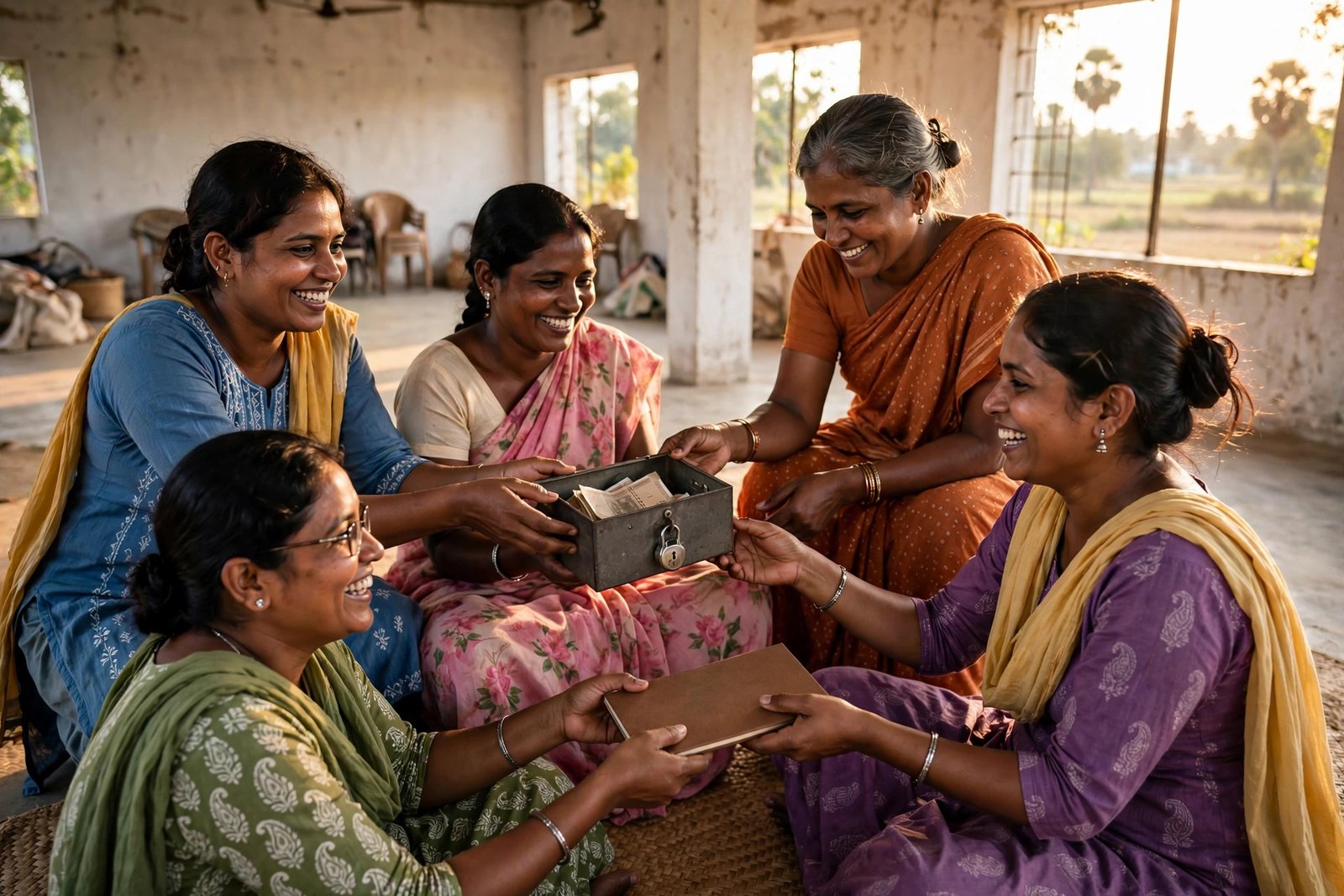
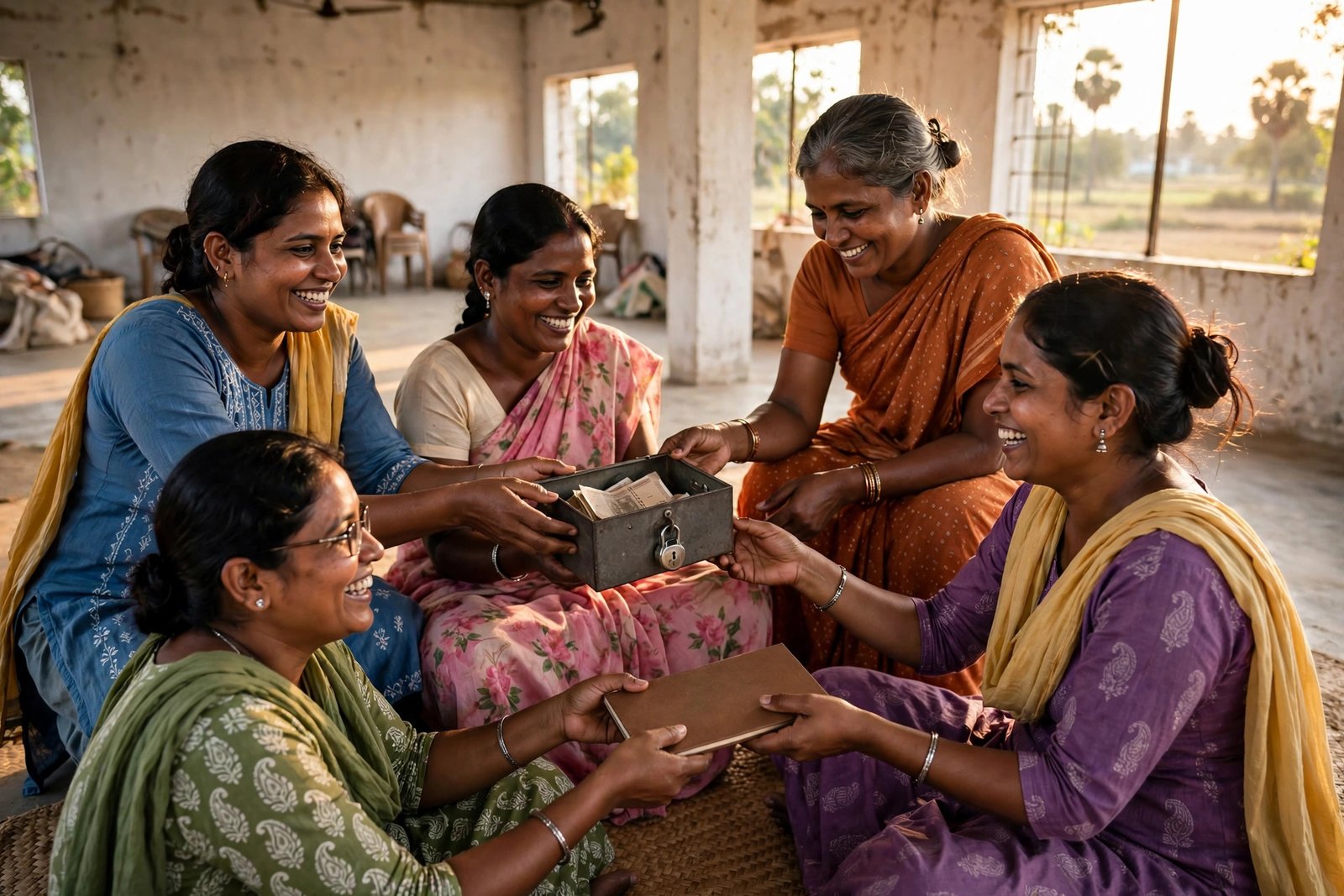
Picture this: twelve women in a small village in Maharashtra, sitting in a circle on the floor of a community hall. There’s no bank branch for miles, no ATM in sight, and most of them have never filled out a loan application. But every month, each one brings 200 rupees, drops it into a metal lockbox, and the treasurer writes the amount in a well-worn notebook. What happens next is quietly remarkable. That small pool of money becomes loans — for a sewing machine, for seeds, for a daughter’s school fees — lent at interest rates the group sets itself. This is self-help groups microfinance in action, and it’s one of the most effective financial models the developing world has ever seen.
You might be wondering: why does this simple model work so well when formal banking so often fails to reach the poor? The answer is trust. Defaulting on a loan means letting your neighbor down — that social pressure, combined with genuine mutual support, produces repayment rates any commercial bank would envy.
What Are Self-Help Groups and How Do They Work?
A self-help group (SHG) is a small, voluntary association of 10 to 20 people — most commonly women — from similar economic backgrounds. The group meets regularly, each member contributes a fixed amount to a common fund, and once the pool is large enough, members borrow from it for productive or emergency needs.
The rules are set by the members themselves: the savings amount, the interest rate on internal loans (far below local moneylenders), and repayment terms. Every transaction is recorded in a passbook. Because the money belongs to the members collectively, there’s a powerful sense of ownership — you’re helping yourself, and your group is helping you right back.
The Power of Internal Lending: Your Money Working for You
Here’s where the model really shines. When a member borrows from the group’s own fund, the interest she pays stays inside the group — growing the common pot instead of vanishing into a moneylender’s pocket. And at 1–2% per month, set by the members themselves, it’s a world away from the 3–10% monthly rates local moneylenders charge.
This “social collateral” is the genius of self-help groups microfinance. When ten women stand behind a loan, no land titles or payslips are needed — the group’s collective reputation is the security. SHG-linked lending programs in South Asia have historically reported repayment rates above 95%, rivaling or beating formal banking portfolios.
How Self-Help Groups Connect to Formal Banking
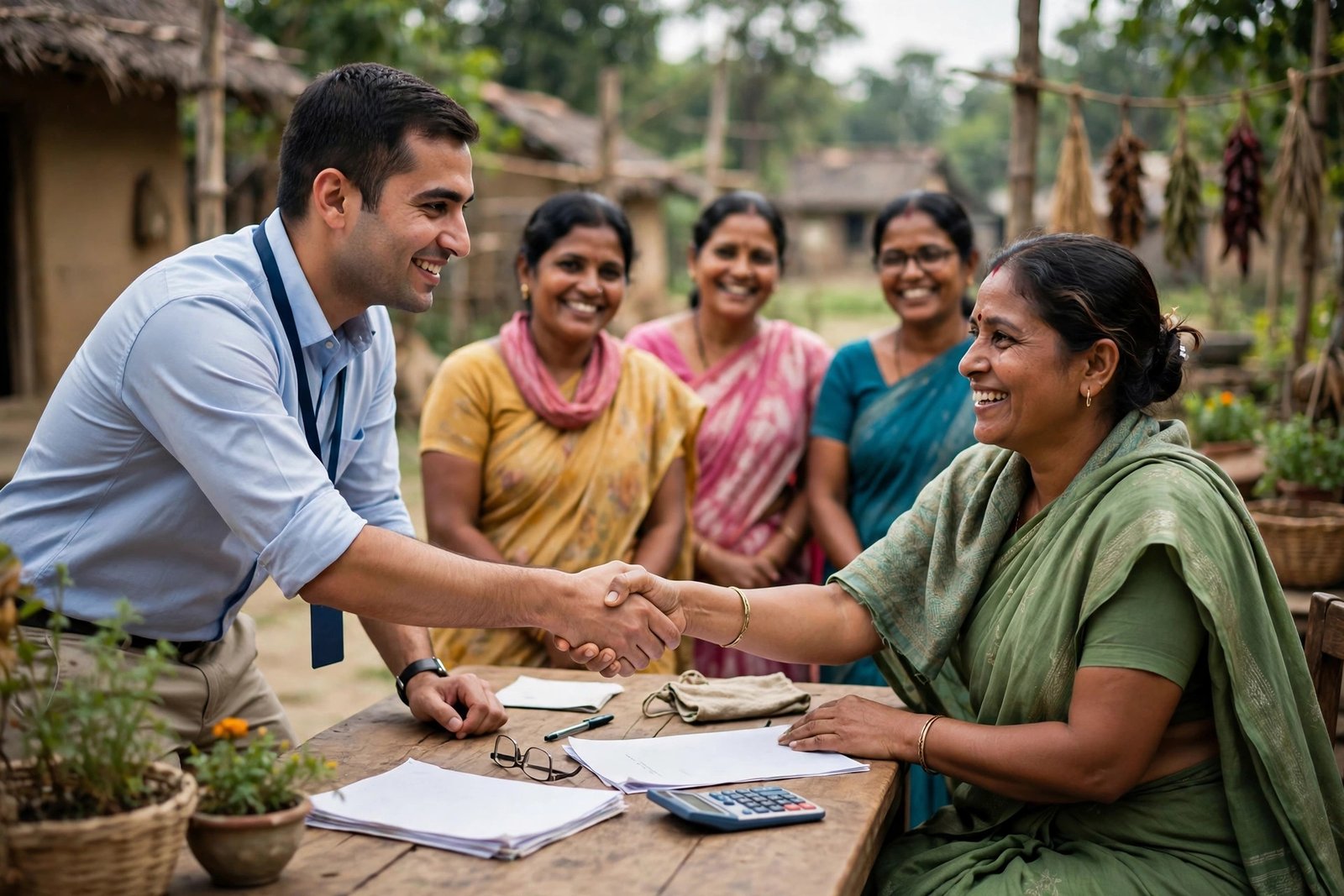
For a long time, the biggest criticism of SHGs was scale: a group saving a few hundred rupees a month can only lend so much. That’s where the bank linkage changed everything. Under programs like India’s SHG–Bank Linkage Programme — the largest microfinance initiative of its kind in the world — banks lend directly to SHGs once the group has demonstrated disciplined saving and repayment, typically for at least six months.
The results have been dramatic. A group of 15 women saving 1,000 rupees each per month builds a fund of 180,000 rupees in a year; a partner bank can then extend a loan of two to four times that amount — enough to finance dairy units, small shops, and tailoring enterprises. Households banks once called “unbankable” now bank as a group, with real bargaining power.
Why Women Lead the SHG Movement
Walk into almost any self-help group meeting in India, Bangladesh, or Nepal and you’ll notice something: the room is full of women. That’s no accident. Women tend to invest loans in their families — children’s education, nutrition, home improvements — while managing repayment with remarkable discipline.
But the impact goes far beyond money. For many members, the SHG meeting is the first space where their voice matters. They elect leaders, keep accounts, and negotiate with banks. Decades of evidence link SHG participation to higher household income, better school enrollment for girls, and greater decision-making power for women.
Challenges Facing Self-Help Groups Microfinance
The model isn’t perfect. Group dynamics can sour, hand-kept ledgers are prone to errors, and many groups depend heavily on NGO or government training that may not last. Easy credit from multiple lenders can also push vulnerable households toward over-indebtedness. The fixes are well known, though — digital bookkeeping apps, federated SHG networks for oversight, and proper financial literacy training — and the model keeps evolving.
How to Start or Join a Self-Help Group
Thinking about joining an SHG or forming one in your community? The barrier to entry is refreshingly low. Here’s the typical path:
- Gather 10–20 people from similar economic backgrounds who trust each other — neighbors, friends, coworkers.
- Agree on basics: monthly savings amount, meeting schedule, and simple rules for borrowing and repayment.
- Open a group bank account so savings are safe and the group builds a formal financial footprint.
- Seek NGO or government support for initial training — many programs offer free facilitation sessions.
After six to twelve months of disciplined saving and internal lending, the group becomes eligible for bank linkage — and that’s when real growth begins.
Frequently Asked Questions
What is the minimum number of members in a self-help group?
Most SHGs have 10 to 20 members. Fewer than 10 makes the savings pool too small; more than 20 becomes hard to manage by consensus. The sweet spot is usually 12 to 15 people who know and trust each other.
Do self-help groups charge interest on internal loans?
Yes, but the rate is set by the members themselves — typically 1–2% per month, far below local moneylenders. The key difference is that this interest stays within the group, growing the common fund rather than enriching an outside lender.
How do banks lend to self-help groups?
Under bank linkage programs, a bank lends to the group as a single unit after 6+ months of regular saving and internal lending. The group then on-lends to members, with its collective guarantee replacing traditional collateral.
Can men join self-help groups?
Absolutely — mixed and men-only SHGs exist. However, the vast majority are women-led because women have shown higher repayment discipline and tend to channel benefits into family welfare. Many government programs specifically target women’s groups.
Conclusion: Small Groups, Big Change
Self-help groups microfinance proves something profound: you don’t need a bank branch to build financial inclusion — you need trust, discipline, and a shared lockbox. From a handful of rupees saved each month, millions of families across South Asia have financed businesses, educated children, and escaped the grip of predatory moneylenders. When people save and borrow together, everyone rises.