




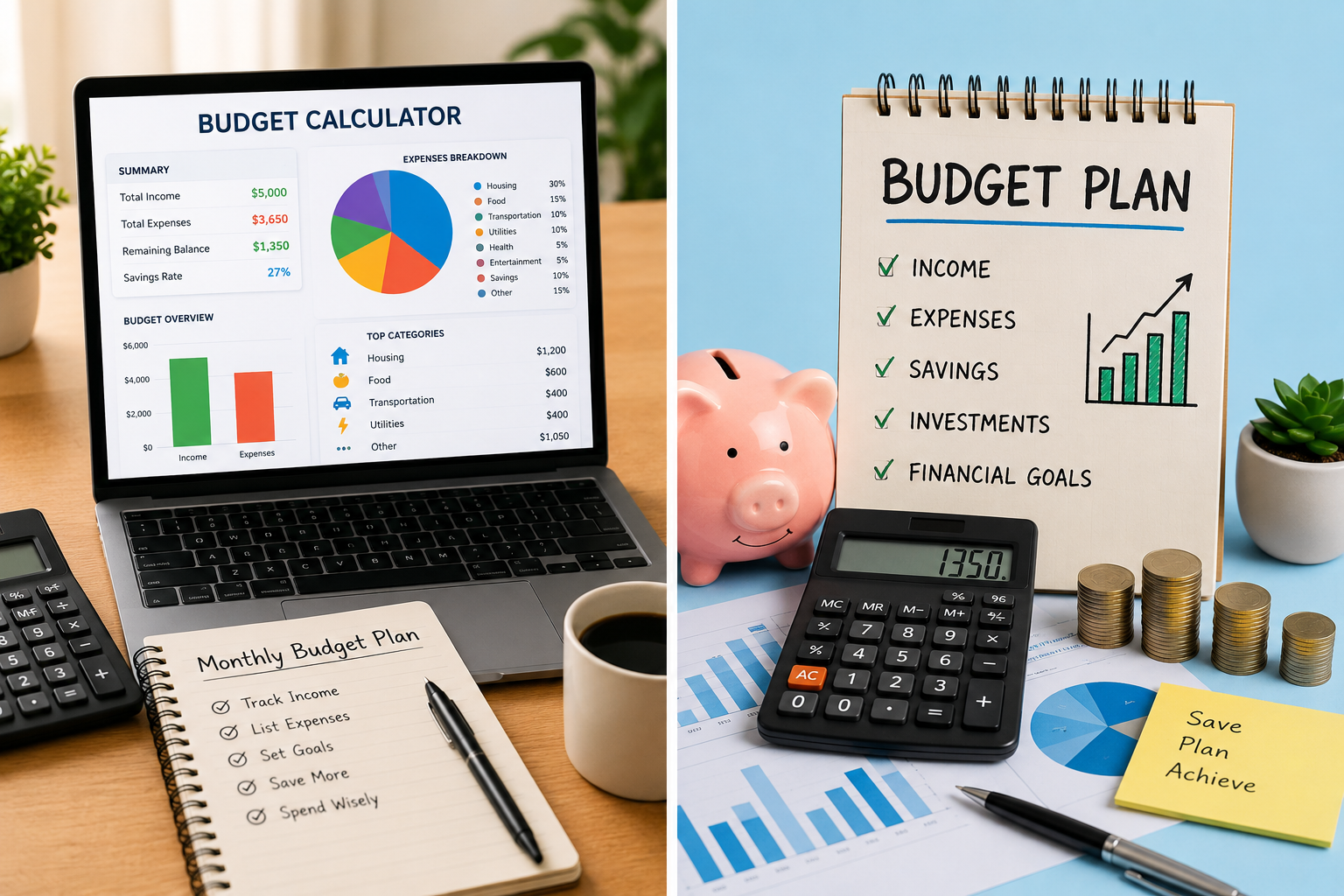
Managing your money doesn’t have to be difficult. Whether you’re trying to save for a vacation, pay off debt, buy a home, or simply avoid running out of money before your next paycheck, a budget calculator is one of the most effective financial tools you can use.
User Guide: Budget Calculator
This budget calculator is a powerful tool designed to help you track your cash flow, analyze your spending habits, and plan for your financial future.
1. Getting Started
- Open the File: Locate the
budget-calculator.htmlfile on your computer. - Launch: Right-click the file and select Open with, then choose any modern web browser (Chrome, Firefox, Safari, or Edge). No internet connection is required to use the basic functions, though the chart uses a CDN for Chart.js.
2. Entering Your Data
The calculator is divided into several logical sections. For each item:
- Input Value: Enter the numerical amount in the text field. You don’t need to type commas or dollar signs; the calculator handles them automatically.
- Select Cycle: Use the dropdown menu next to each input to specify if the amount is Monthly or Annual. The calculator will automatically normalize these values to provide a consistent comparison.
3. Key Sections to Fill
- Incomes (Before Tax): Enter your gross salary, pensions, and investment returns. Be sure to include your Income Tax Rate so the calculator can estimate your take-home pay.
- Housing & Utilities: Include your rent/mortgage, property taxes, and regular utility bills.
- Transportation: Account for car loans, insurance, and fuel costs.
- Living Expenses: This covers daily needs like groceries, dining out, and clothing.
- Savings & Investments: Track how much you are putting away for the future (401k, IRA, etc.).
4. Generating Results
- Calculate: Once you’ve entered your data, click the green 📊 Calculate Budget button. The page will smoothly scroll down to the Results section.
- Clear All: If you want to start over, click the red 🔄 Clear All button to reset all fields to zero.
5. Understanding Your Results
After calculating, you will see three main areas of analysis:
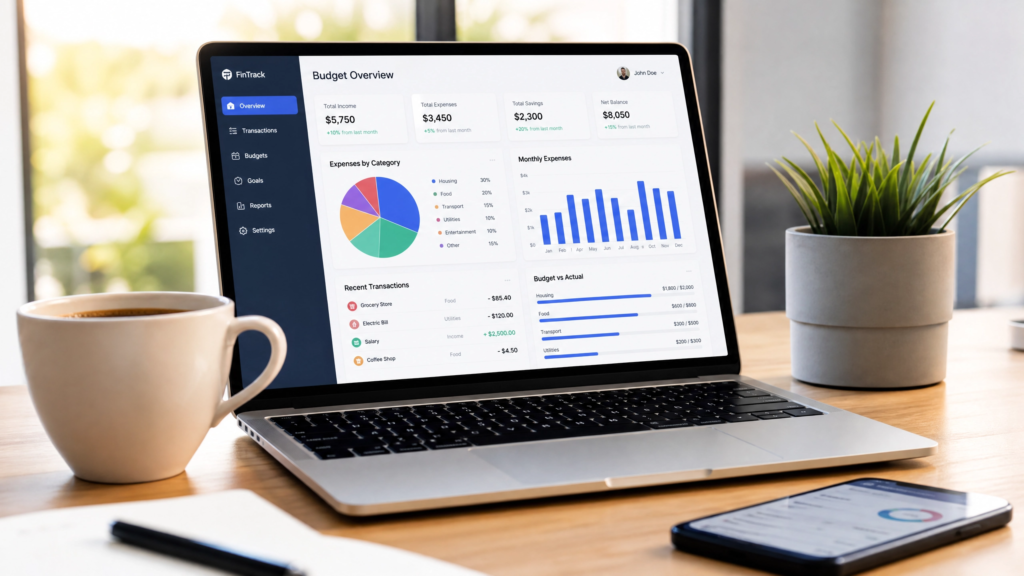
- Summary Table: Shows your total income and expenses on both an annual and monthly basis. The Net (Surplus/Deficit) line tells you if you are saving money (green) or overspending (red).
- Debt-to-Income (DTI) Ratio: This is a critical metric used by lenders.
- Good: Below 36%.
- Moderate: 36% to 43%.
- High: Above 43% (indicates potential financial stress).
- Visual Breakdown: A dynamic doughnut chart provides an immediate visual of where your money is going. Hover over any segment to see the exact dollar amount.
6. Pro Tips for Accurate Budgeting
- Be Honest: Include even small recurring expenses like streaming subscriptions or coffee runs in the “Other” categories.
- Estimate Maintenance: For homes and cars, use an average monthly cost for repairs rather than leaving it at zero.
- Tax Accuracy: If you’re unsure of your tax rate, check your most recent pay stub for the total percentage withheld.
💰 Budget Calculator
Plan your personal finances with detailed income and expense tracking
Summary
| Category | Annual | Monthly |
|---|---|---|
| Total Before Tax Income | $0 | $0 |
| Total After Tax Income | $0 | $0 |
| Total Expenses | $0 | $0 |
| Net (Surplus/Deficit) | $0 | $0 |
Debt-to-Income (DTI) Ratio
| DTI Ratio | 0% |
| Front-End DTI (Housing) | 0% |
Detailed Expenses Breakdown
| Category | Annual | Monthly | % of Income |
|---|
Many people know how much they earn each month but have little idea where their money actually goes. Small daily expenses, recurring subscriptions, unexpected bills, and impulse purchases can quickly reduce your available cash. A budget calculator helps you organize your finances by comparing your income with your expenses, giving you a clear picture of your financial health.
In this guide, you’ll learn what a budget calculator is, how it works, why it’s important, how to create a successful budget, and practical tips for improving your financial future.
What Is a Budget Calculator?
A budget calculator is a financial planning tool that helps you estimate your monthly income, record your expenses, and calculate how much money remains after paying your bills.
Instead of manually using spreadsheets or paper, a budget calculator performs the calculations automatically. It helps you identify spending patterns, reduce unnecessary expenses, and increase your savings.
Whether you’re a student, employee, freelancer, business owner, or retiree, budgeting can help you make informed financial decisions.
Why Is Budgeting Important?
Creating a budget isn’t about restricting your spending. It’s about understanding your finances and making your money work for you.
A well-planned budget can help you:
- Track your monthly income
- Monitor everyday spending
- Avoid overspending
- Build an emergency fund
- Save for major purchases
- Reduce financial stress
- Pay off loans faster
- Improve long-term financial security
People who regularly review their budgets often feel more confident about their finances because they know exactly where their money is going.
How Does a Budget Calculator Work?
A budget calculator follows a simple process.
Step 1: Enter Your Income
Include every source of monthly income, such as:
- Salary
- Freelance work
- Business income
- Rental income
- Investment returns
- Pension
- Side hustle earnings
The calculator combines these amounts to determine your total monthly income.
Step 2: Add Your Expenses
Expenses generally fall into two categories.
Fixed Expenses
These usually stay the same each month.
Examples include:
- Rent or mortgage
- Car payment
- Insurance
- Loan installments
- Internet
- Phone bill
- School fees
Variable Expenses
These change from month to month.
Examples include:
- Groceries
- Fuel
- Dining out
- Entertainment
- Shopping
- Medical expenses
- Utilities
Step 3: Calculate Your Remaining Balance
The calculator subtracts your total expenses from your total income.
Formula
Remaining Balance = Total Income − Total Expenses
If your balance is positive, you’re living within your means.
If it’s negative, you’re spending more than you earn.
Benefits of Using a Budget Calculator
Better Financial Awareness
Many people underestimate how much they spend each month. A budget calculator provides a detailed overview of your finances.
Easier Savings
When you know where your money goes, finding opportunities to save becomes much easier.
Debt Reduction
Budgeting allows you to allocate more money toward paying loans and credit card balances.
Improved Financial Discipline
Tracking expenses encourages responsible spending habits.
Better Financial Planning
Whether you’re planning a vacation, buying a new car, or investing for retirement, budgeting makes goal setting easier.
Common Expense Categories
A good budget should include all regular expenses.
Housing
- Rent
- Mortgage
- Property tax
- Maintenance
Transportation
- Fuel
- Public transport
- Car insurance
- Repairs
Food
- Groceries
- Restaurants
- Snacks
- Coffee
Utilities
- Electricity
- Water
- Gas
- Internet
- Mobile phone
Healthcare
- Insurance
- Medicines
- Doctor visits
Education
- Tuition
- Books
- Online courses
Entertainment
- Streaming services
- Movies
- Gaming
- Sports
Savings
- Emergency fund
- Retirement
- Investments
The 50/30/20 Budget Rule
One of the easiest budgeting methods is the 50/30/20 Rule.
50% for Needs
Essential expenses like:
- Rent
- Utilities
- Insurance
- Food
- Transportation
30% for Wants
Optional spending such as:
- Dining out
- Shopping
- Travel
- Entertainment
20% for Savings
Money reserved for:
- Emergency fund
- Investments
- Retirement
- Debt repayment
This simple rule helps maintain a balanced financial lifestyle.
How to Create a Realistic Budget
Know Your Monthly Income
Calculate your average monthly income after taxes.
Track Every Expense
Record every purchase, no matter how small.
Many people are surprised by how much they spend on coffee, subscriptions, and online shopping.
Set Financial Goals
Examples include:
- Save $5,000
- Buy a house
- Pay off student loans
- Build a six-month emergency fund
Goals make budgeting more meaningful.
Review Monthly
Budgets aren’t fixed forever.
Your income and expenses change over time, so review your budget every month.
Common Budgeting Mistakes
Ignoring Small Purchases
Daily coffee, snacks, and subscriptions may seem insignificant but add up over time.
Forgetting Annual Expenses
Remember expenses like:
- Insurance renewals
- Vehicle registration
- Holiday shopping
- School admissions
Divide these costs by 12 and include them in your monthly budget.
Setting Unrealistic Limits
A budget should be practical.
Cutting every enjoyable expense usually leads to frustration and abandoning the budget.
Not Saving for Emergencies
Unexpected expenses happen.
A budget should always include emergency savings.
Budgeting Tips That Actually Work
- Pay yourself first.
- Save before spending.
- Avoid impulse purchases.
- Compare prices before buying.
- Reduce unnecessary subscriptions.
- Cook more meals at home.
- Automate savings.
- Review bank statements regularly.
- Use cashback and reward programs wisely.
- Increase income through freelancing or side projects.
Who Should Use a Budget Calculator?
A budget calculator benefits almost everyone.
Students
Manage tuition, rent, and living expenses.
Families
Track household expenses and save for future goals.
Freelancers
Manage irregular income and taxes.
Business Owners
Separate personal and business expenses.
Retirees
Monitor retirement income and healthcare costs.
Budget Calculator vs Expense Tracker
Although similar, these tools serve different purposes.
| Budget Calculator | Expense Tracker |
|---|---|
| Plans future spending | Records past spending |
| Helps create budgets | Helps monitor expenses |
| Sets savings goals | Identifies spending habits |
| Calculates remaining income | Tracks transactions |
Using both together provides the best financial insights.
How Often Should You Update Your Budget?
Financial experts recommend reviewing your budget:
- Every month
- After a salary increase
- When changing jobs
- After major purchases
- When starting a family
- Before taking a loan
Regular updates keep your budget accurate.
Digital Budgeting vs Paper Budgeting
Digital Budget
- Automatic calculations
- Easy updates
- Charts and reports
- Accessible anywhere
- Faster analysis
Paper Budget
- Simple
- No internet required
- Good for beginners
Most people prefer digital budgeting because it’s faster and more convenient.
Tips for Saving More Every Month
Saving money doesn’t always require earning more.
Consider these habits:
- Cancel unused subscriptions.
- Shop with a grocery list.
- Avoid unnecessary debt.
- Compare insurance providers.
- Buy quality products that last longer.
- Set automatic monthly savings.
- Use discounts responsibly.
- Plan large purchases in advance.
Small changes made consistently can produce significant long-term savings.
Why Use an Online Budget Calculator?
An online budget calculator offers several advantages over manual budgeting:
- Instant calculations
- No spreadsheet knowledge required
- Easy to update
- Helps identify spending trends
- Supports better financial decisions
- Saves time
- Improves financial discipline
Whether you’re planning for the next month or the next decade, an online budget calculator makes money management simpler and more effective.
Frequently Asked Questions
What is the purpose of a budget calculator?
A budget calculator helps compare your income and expenses so you can manage money more effectively and increase savings.
Is a budget calculator free?
Many online budget calculators are completely free to use and require no registration.
Can budgeting help me save money?
Yes. Budgeting identifies unnecessary spending and helps allocate more money toward savings and financial goals.
How often should I update my budget?
Review your budget every month or whenever your income or expenses change.
Does budgeting work for irregular income?
Yes. Freelancers and self-employed individuals can use average monthly income and adjust budgets as earnings fluctuate.
Is budgeting useful if I have no debt?
Absolutely. Budgeting helps you build wealth, prepare for emergencies, and achieve long-term financial goals even if you’re debt-free.
Final Thoughts
A budget is more than just a list of numbers—it’s a roadmap for achieving financial stability and reaching your personal goals. By tracking your income, understanding your expenses, and making informed spending decisions, you can reduce financial stress and build a stronger future.
A budget calculator simplifies this process by doing the math for you and presenting a clear picture of your finances. Whether you’re saving for a major purchase, paying off debt, or simply trying to manage your monthly expenses more effectively, using a budget calculator consistently can make a meaningful difference.
Start today by entering your income and expenses, reviewing your spending habits, and setting realistic financial goals. Even small improvements in budgeting can lead to significant long-term benefits for your financial well-being.


4 thoughts on “Budget Calculator: Your Complete Guide to Better Money Management”