





Pakistan Football : Complete Guide (2026)
When people think about football, they often imagine packed stadiums, passionate fans, and international tournaments. However, behind every professional match is a global manufacturing industry that produces millions of footballs every year. One country has earned a remarkable reputation in this field—Pakistan’s Football Industry
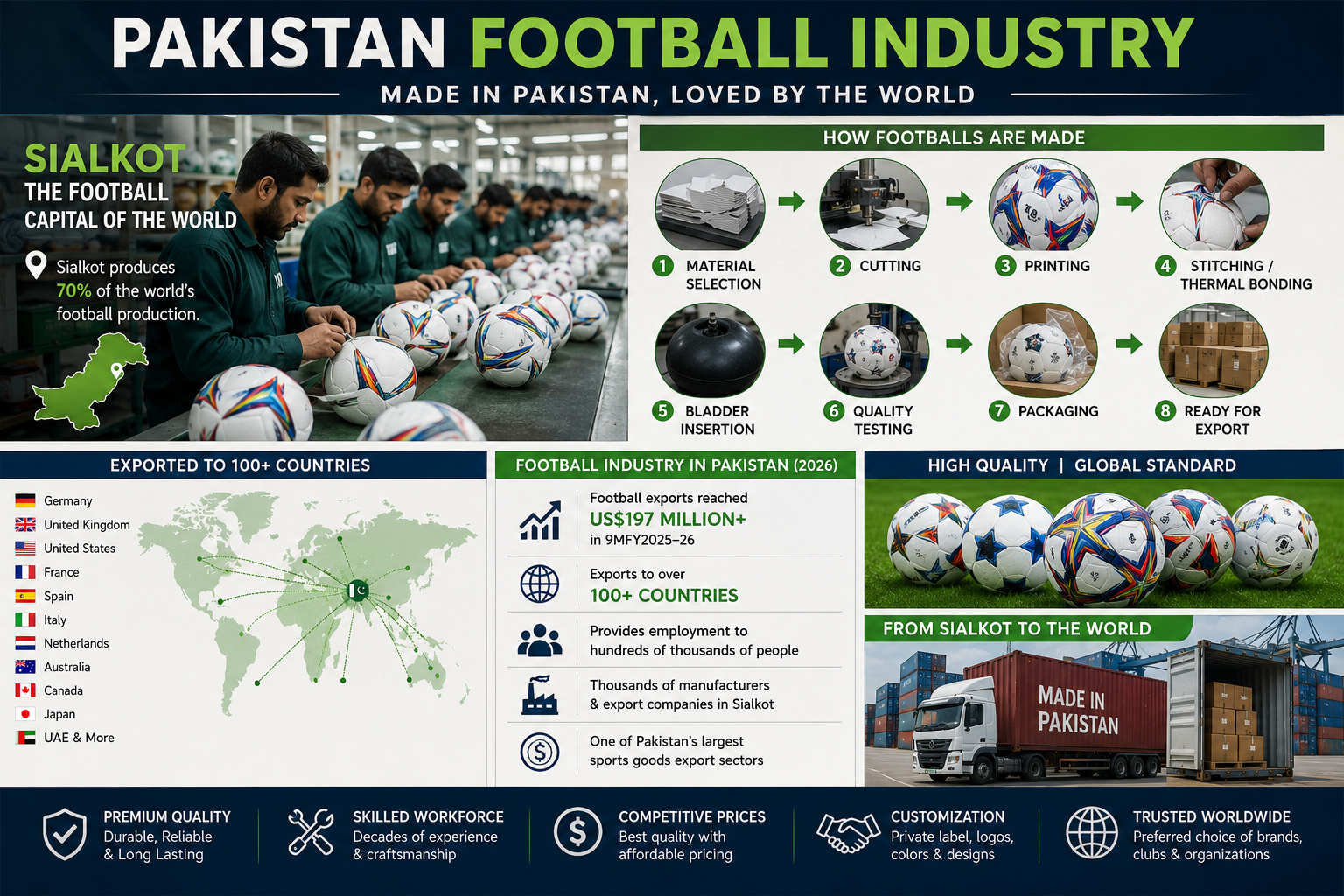
The Pakistan football industry is one of the country’s most successful export sectors. For decades, Pakistani manufacturers have supplied high-quality footballs to international sports brands, professional leagues, schools, and retailers across the world. At the heart of this success is Sialkot, a city widely recognized as one of the world’s leading football manufacturing hubs.
In 2026, Pakistan continues to strengthen its position in the global sports goods market by combining traditional craftsmanship with modern production technology. Whether you are an entrepreneur, exporter, investor, or football enthusiast, understanding this industry offers valuable insights into one of Pakistan’s most important manufacturing success stories.
This guide explores the history, manufacturing process, export market, investment opportunities, challenges, and future of the football manufacturing business in Pakistan.
The History of Football Manufacturing in Pakistan
Pakistan’s journey into football manufacturing began more than a century ago. During the British colonial period, local craftsmen in Sialkot developed exceptional leatherworking skills. Over time, these artisans started producing footballs by hand, earning a reputation for quality and durability.
As international demand grew, global sports brands began sourcing footballs from Pakistan. By consistently delivering reliable products, Pakistani manufacturers established long-term partnerships with some of the world’s biggest sporting companies.
Today, the football industry has become one of Pakistan’s most recognized export sectors. Every year, millions of footballs manufactured in Pakistan are shipped to countries across Europe, North America, Asia, and the Middle East.
Why Is Sialkot Called the Football Capital of Pakistan?
Sialkot is more than just an industrial city—it is the backbone of Pakistan’s sports goods industry. Thousands of skilled workers, modern factories, and export companies operate here, producing footballs that meet international quality standards.
Several factors have contributed to Sialkot’s global reputation:
Skilled Workforce
Generations of workers have mastered the art of football stitching and assembly. Their experience helps maintain consistent quality while adapting to modern manufacturing techniques.
Modern Manufacturing Facilities
Many factories now use advanced cutting machines, thermal bonding technology, computerized printing systems, and automated quality testing equipment.
Strong Export Network
Sialkot has developed efficient logistics and export systems that allow manufacturers to deliver products to customers around the world quickly and reliably.
International Recognition
Pakistani footballs have been used in international competitions and are trusted by professional clubs, educational institutions, and sports retailers worldwide.
How Footballs Are Manufactured in Pakistan
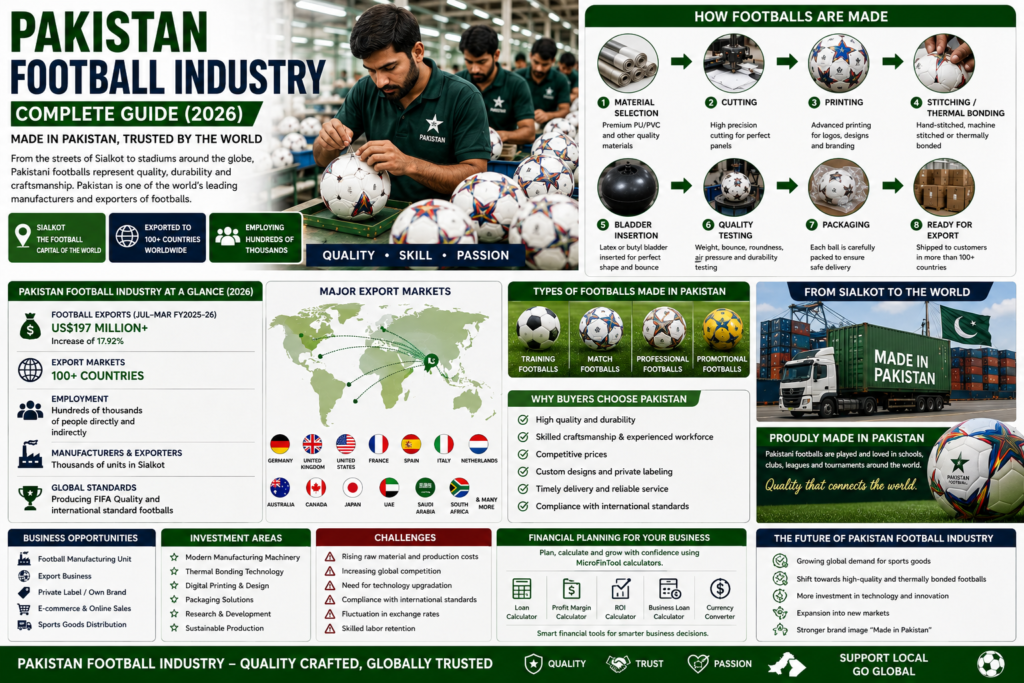
One of the biggest reasons behind Pakistan’s success is its detailed manufacturing process. Every football goes through multiple production stages before reaching customers.
1. Material Selection
High-quality footballs begin with carefully selected materials. Manufacturers use premium synthetic leather, polyurethane (PU), polyvinyl chloride (PVC), foam layers, polyester fabric, latex bladders, and butyl bladders depending on the product category.
Premium footballs generally use polyurethane because it provides excellent durability, water resistance, and a softer touch.
2. Panel Design and Cutting
Modern footballs are designed using computer software to ensure perfect symmetry.
Large sheets of synthetic leather are placed into precision cutting machines that produce identical football panels. Accurate cutting helps improve balance and flight performance.
3. Printing and Branding
Before assembly begins, each panel receives printed graphics, logos, colors, and branding.
Manufacturers use advanced printing technologies to create sharp designs that resist fading even after extensive use.
Custom printing is also available for schools, sports clubs, retailers, promotional events, and private brands.
4. Stitching or Thermal Bonding
This is one of the most important production stages.
Hand-Stitched Footballs
Pakistan is famous for producing hand-stitched footballs.
Experienced workers carefully stitch every panel together using strong polyester thread. Hand stitching provides excellent durability and allows damaged panels to be repaired more easily.
Machine-Stitched Footballs
Machine stitching increases production speed while maintaining consistent quality. These footballs are commonly sold in schools and recreational sports markets.
Thermally Bonded Footballs
Premium footballs are produced using thermal bonding technology instead of traditional stitching.
This method creates smoother surfaces, reduces water absorption, and improves aerodynamic performance during matches.
5. Bladder Installation
After the outer shell is completed, manufacturers insert the football bladder.
Two common bladder types are used:
- Latex Bladders: Softer feel and better performance but require more frequent inflation.
- Butyl Bladders: Better air retention and longer-lasting pressure.
The choice depends on the intended use of the football.
6. Inflation and Shape Testing
Each football is inflated according to international pressure standards.
Manufacturers inspect every product for:
- Perfect roundness
- Correct air pressure
- Weight consistency
- Bounce accuracy
- Surface quality
- Valve performance
Only footballs that meet quality standards proceed to the final stage.
7. Packaging and Export
After passing inspection, footballs are cleaned, packaged, labeled, and prepared for export.
Products are shipped to wholesalers, sports retailers, online marketplaces, schools, football clubs, and international distributors across multiple countries.
Proper packaging ensures the footballs remain protected during transportation and storage.
Different Types of Footballs Made in Pakistan
The Pakistan football manufacturing industry produces a wide range of footballs for different customer needs.
Training Footballs
Designed for schools, academies, and daily practice sessions, these footballs focus on durability and affordability.
Match Footballs
Built to higher standards, match footballs offer improved accuracy, balance, and touch for competitive play.
Professional Footballs
Professional-grade footballs use premium materials and advanced construction methods to deliver top-level performance.
Promotional Footballs
Businesses often order customized footballs featuring logos, branding, or event details for marketing campaigns and corporate giveaways.
(End of Part 1)
This next section will continue seamlessly from Part 1.