




A balance transfer credit card lets you move existing credit card debt onto a new card charging 0% interest for up to 36 months. In 2026 the longest UK deals reach 38 months with a one-off fee of 2.9–3.49% — and the maths almost always beats paying 24% APR on the old card. If you’re carrying expensive card debt, this is the single most powerful tool for killing it.
But “0% interest” has small print, and the small print has teeth. Here’s exactly how balance transfer credit cards work in the UK in 2026, the worked maths on £3,000, and the five traps that turn a great deal into an expensive mistake.

How Balance Transfer Credit Cards UK Deals Work, Step by Step
The mechanics are simpler than the jargon suggests:
- 1. Apply for the new card. The longest 0% deals go to applicants with good credit scores. Use a lender’s eligibility checker first — it’s a soft search, so checking won’t harm your score.
- 2. Request the transfer. Tell the new provider which cards you’re moving debt from and how much. Do this within the transfer window — usually 60 to 90 days from opening the account — or you lose the 0% offer.
- 3. Pay the transfer fee. Most cards charge a one-off fee of around 2–3.5% of the amount moved, added straight onto your new balance. Move £3,000 at 3% and you owe £3,090.
- 4. The new provider pays off your old card. Your debt now lives on the new card, at 0%.
- 5. Repay during the 0% window. Every pound you pay cuts the actual balance — no interest skimmed off the top.
- 6. Beat the cliff. When the 0% period ends, any remaining balance reverts to the card’s standard rate — typically around 24.9% APR. The whole game is clearing the debt before that date.
In 2026, the headline deals include TSB at up to 38 months (3.49% fee), HSBC at 36 months (3.09%), Virgin Money at 36 months (3.1%) and Capital One at up to 36 months (2.9%). Shorter no-fee options exist too — NatWest offers up to 11 months with no transfer fee, and Santander up to 18 months fee-free.
The £3,000 Fee-vs-Interest Maths
Let’s run the numbers, because this is where sceptics become converts. You owe £3,000 on a card charging 22.9% APR, and you can afford £150 a month.
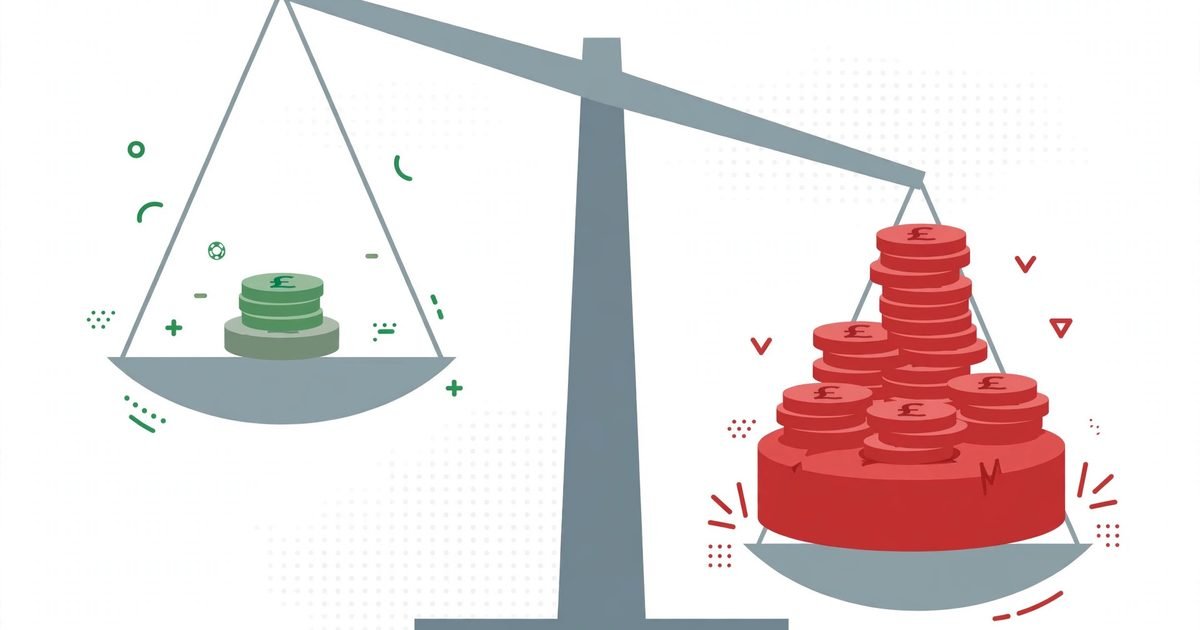
Staying put: at 22.9% APR, roughly £300–£400 of your payments over two years goes to interest, not debt. You’re treading water in an expensive pool.
Transferring: a 3% fee on £3,000 costs £90, added to the balance. At 0% for 24+ months, every penny of your £150 monthly payment attacks the debt. Total cost of borrowing: £90.
The saving is £200–£300 on £3,000 — and it scales. On £5,000 or £8,000 of debt, a single transfer can save four figures. The fee looks like a cost until you compare it with the alternative.
Now work backwards from the 0% end date. £3,090 to clear over a 36-month deal means about £86 a month. Set up that direct debit on day one and the debt dies on schedule. This single habit — dividing the balance by the months — is what separates people who escape debt from people who just rearrange it.
Five Traps That Undo the Benefit
Trap 1: You can’t transfer between cards from the same bank. Moving debt from a Barclaycard to another Barclaycard doesn’t work — the transfer must go to a different banking group. Check before you apply.
Trap 2: New spending usually isn’t at 0%. The 0% covers the transferred balance, not new purchases — those may be charged at the standard rate from day one, with no interest-free period. Never use a balance transfer card for spending. Cut it up if you must; keep it purely as a debt-clearing tool.
Trap 3: “Up to” doesn’t mean you’ll get it. A card advertising “up to 38 months” may offer some accepted applicants 35 or 32 months instead. A “definite” deal gives every accepted applicant the stated term. When Martin Lewis’s team reported TSB’s up-to-38-month deal in early 2026 — the longest seen since 2018 — they stressed exactly this distinction.
Trap 4: Missing the transfer window. Most cards require the transfer within 60–90 days of opening. Miss it and you’ve got a new credit card with no 0% benefit — and a hard search on your credit file to show for it.
Trap 5: The end-of-offer cliff. Whatever remains when the 0% ends gets hit with ~24.9% APR. If you can’t clear it in time, plan your next move before the deadline — another transfer to a new 0% deal, or a fixed repayment plan — not after the interest starts biting.
How to Pick the Right Deal in 2026
The choice is a trade-off: longer 0% period → larger fee versus shorter 0% period → smaller or zero fee. Someone who can clear £3,000 at £250 a month needs only 12 months — paying a 3.49% fee for 38 months of 0% they won’t use is wasted money. A no-fee 11–18 month card is the smarter pick.
Conversely, choosing a 12-month card when you can only afford £120 a month on £5,000 of debt is a different failure: the maths doesn’t close before the offer ends. Be honest about your monthly number first, then match the deal to it.
Two final 2026 notes. Always use the eligibility checker before applying — a rejected application leaves a hard-search mark with nothing to show for it. And with markets pricing in possible Bank of England rate rises, Martin Lewis’s advice this year has been blunt: if you’re paying interest on card debt, sort it sooner, because 0% deals can quietly worsen even when the headlines don’t change.
FAQs
How do balance transfer credit cards in the UK actually make money?
Balance transfer credit cards make money from the one-off transfer fee (typically 2–3.5% of the amount moved), from customers who don’t clear the balance before the 0% period ends and start paying ~24.9% APR, and from new spending on the card charged at standard rates. The 0% offer is a loss-leader designed to win profitable long-term customers.
Can I transfer a balance between two cards from the same bank?
No. UK balance transfer cards don’t allow transfers between cards issued by the same banking group — for example, you can’t move debt from one Barclaycard to another Barclaycard. The transfer must go to a different provider. Always check which banking group your existing card belongs to before applying for a new one.
Does applying for a balance transfer card hurt my credit score?
Using an eligibility checker causes only a soft search, which doesn’t affect your score. The formal application triggers a hard search, which leaves a small temporary mark. Successfully managing the new card — staying within limits and paying on time — generally helps your score over time by lowering your credit utilisation.
What happens if I don’t pay off the balance before the 0% ends?
Any remaining balance reverts to the card’s standard APR — typically around 24.9% — and starts accruing interest immediately. Plan ahead: either arrange another balance transfer to a new 0% deal before the deadline or switch to fixed monthly payments large enough to clear the debt. Never just let the 0% expire and hope.
The Bottom Line
A 0% balance transfer card is the closest thing to a cheat code in personal finance: pay a small one-off fee, get up to three years of interest-free debt destruction. The rules are simple — different bank, transfer within the window, never spend on it, clear it before the cliff. Follow them, and £90 today can save you hundreds tomorrow.
Balance transfer credit cards make money from the one-off transfer fee (typically 2–3.5% of the amount moved), from customers who don’t clear the balance before the 0% period ends and start paying ~24.9% APR, and from new spending on the card charged at standard rates. The 0% offer is a loss-leader designed to win profitable long-term customers.
No. UK balance transfer cards don’t allow transfers between cards issued by the same banking group — for example, you can’t move debt from one Barclaycard to another Barclaycard. The transfer must go to a different provider. Always check which banking group your existing card belongs to before applying for a new one.
Using an eligibility checker causes only a soft search, which doesn’t affect your score. The formal application triggers a hard search, which leaves a small temporary mark. Successfully managing the new card — staying within limits and paying on time — generally helps your score over time by lowering your credit utilisation.
Any remaining balance reverts to the card’s standard APR — typically around 24.9% — and starts accruing interest immediately. Plan ahead: either arrange another balance transfer to a new 0% deal before the deadline or switch to fixed monthly payments large enough to clear the debt. Never just let the 0% expire and hope.