


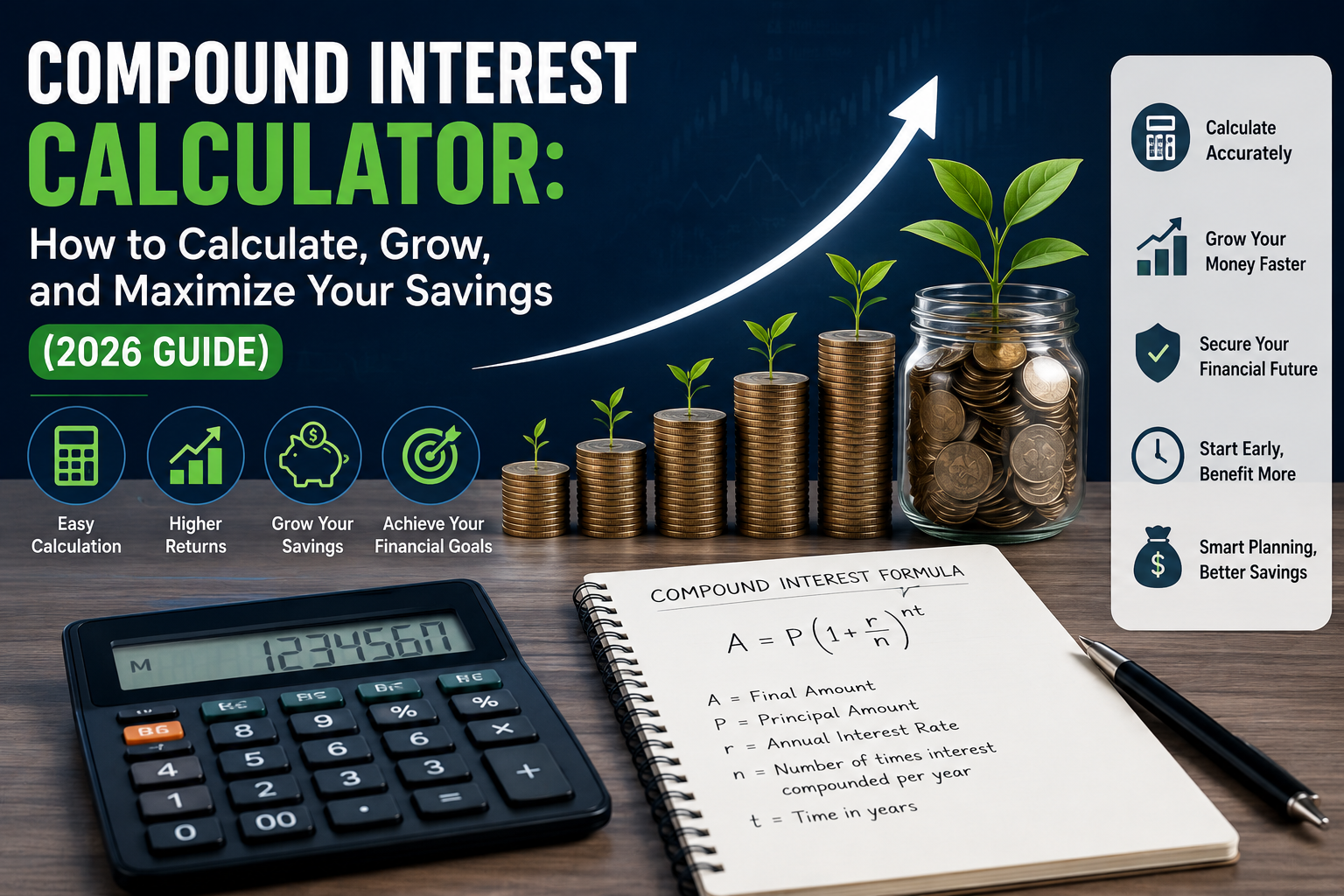

You’ve probably heard people call it “the eighth wonder of the world” — and honestly, compound interest explained properly is one of those rare money topics that actually lives up to the hype. The basic idea is beautifully simple: you earn returns on your money, and then you earn returns on those returns. That’s it. But that tiny second part — returns on your returns — is what turns a modest monthly saving habit into something that can genuinely change your life over time. Let’s break it down without the jargon.
What Is Compound Interest, Really?
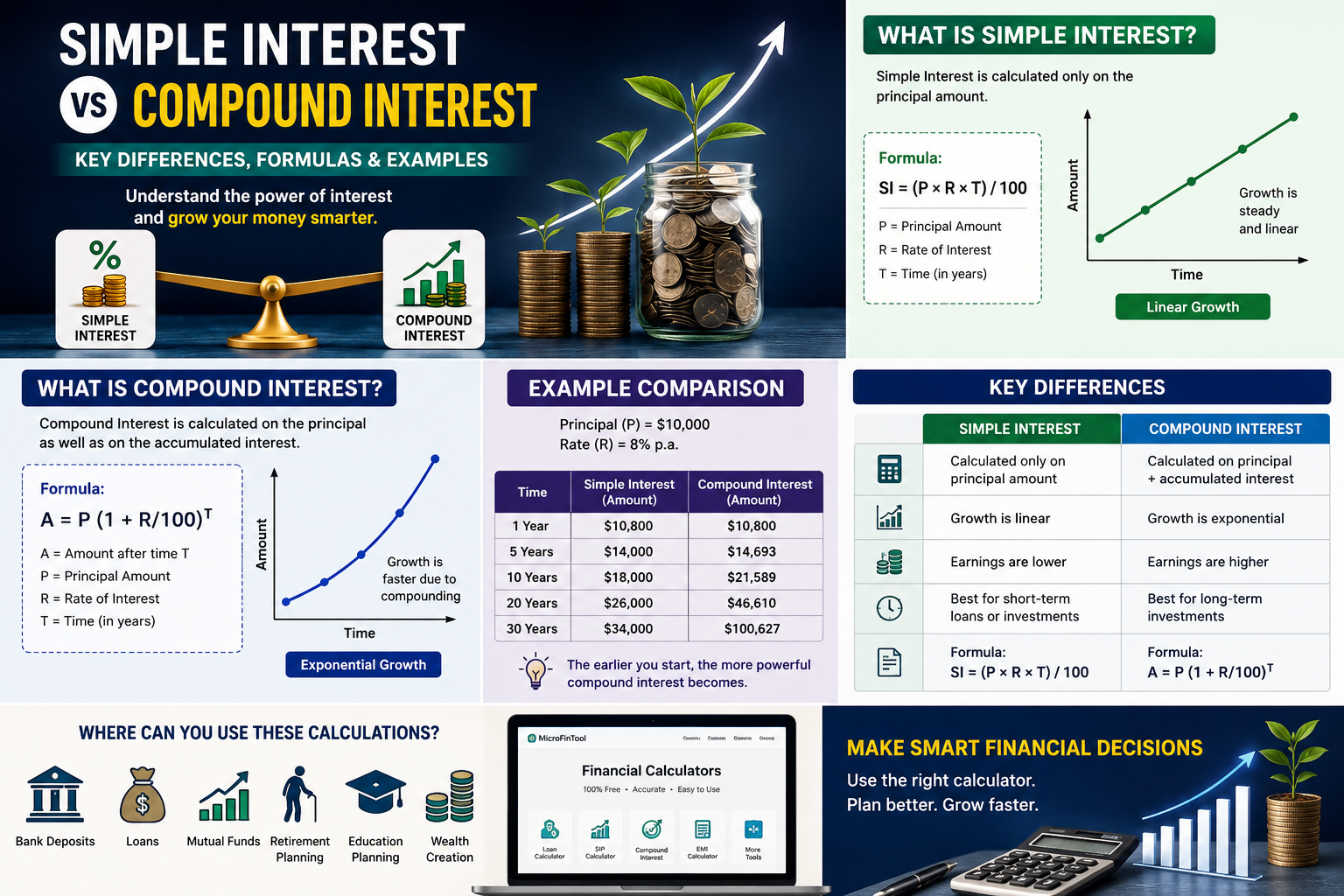
Here’s the distinction that matters. With simple interest, you earn a fixed amount on your original deposit — £1,000 at 5% earns you £50 a year, every year, forever. With compound interest, that £50 gets added to your balance, so next year you earn 5% on £1,050 (£52.50), then on £1,102.50, and so on. Each year your money grows on a slightly bigger base.
In the first few years, the difference feels almost insulting. Simple vs compound on £1,000 at 5%? After year one, both give you £1,050. After year two, compound gives you £1,102.50 versus £1,100 — a whole £2.50 difference. Yawn. But this is the trick that catches almost everyone: compounding is invisible at first and unstoppable later. The curve stays flat for a long time and then bends upward sharply, and most people give up during the flat part because they assume nothing’s happening. Spoiler: it is.
Banks, savings accounts, ISAs, pension funds and index funds all rely on compounding. Whenever your returns are reinvested rather than paid out and spent, you’re compounding. That’s why every financial adviser in London, New York or Berlin drones on about starting early — they’ve seen the maths.
Compound Interest Explained With Real Numbers: £100 a Month at 7%
Forget abstract percentages for a moment. Imagine you put £100 a month into a stocks-and-shares ISA earning an average of 7% a year — roughly the long-term average of a global index fund after inflation adjustments. Here’s what happens to your pot:
- After 10 years: you’ve paid in £12,000, and your pot is worth around £17,300. Not bad — your money earned you about £5,300 extra.
- After 20 years: you’ve paid in £24,000, and your pot is roughly £52,000. Your contributions grew, but so did the earnings-on-earnings.
- After 30 years: you’ve paid in £36,000, and your pot is about £122,000. Let that sink in — you contributed £36k, and compounding added roughly £86k on top.
Notice what happened? Doubling the time from 15 to 30 years doesn’t double the result — it more than triples it. That’s the curve bending. And here’s the kicker: of that final £122,000, only about 30% came from your pocket. The rest came from time doing the heavy lifting. This is why “compound interest explained” always comes back to the same punchline: time in the market beats timing the market, and it beats big contributions too.
The Rule of 72: Your Pocket Calculator Trick
Want to estimate how fast your money doubles without touching a spreadsheet? Use the Rule of 72: divide 72 by your annual interest rate, and the answer is roughly how many years it takes your money to double.
At 7% a year: 72 ÷ 7 ≈ 10.3 years to double. At 3% (a typical easy-access savings account): 72 ÷ 3 = 24 years to double. And at 12% (credit card debt territory)? 72 ÷ 12 = 6 years — which means an unpaid £2,000 balance at 12% becomes £4,000 in about six years even if you never spend another penny. Ouch.
It’s not exact — the maths behind it involves logarithms, and nobody needs that — but it’s close enough for real-world decisions. Use it when comparing savings accounts, when someone pitches you an investment (“guaranteed 15%!” means doubling every 4.8 years — does that sound plausible to you?), and especially when weighing up debt. Compounding doesn’t care whether it works for you or against you.
Why Starting Early Beats Investing More
Meet Anna and Ben. Anna starts investing £200 a month at 25 and stops at 35 — she puts in £24,000 total and never adds another penny. Ben waits until he’s 35, then invests £200 a month until he’s 65 — he puts in £72,000, three times as much. Assuming 7% annual growth, who ends up richer at 65?
Anna. By a mile. Her £24,000 has 40 years to compound and grows to roughly £530,000. Ben’s £72,000 has only 30 years and reaches about £245,000. Anna invested a third of the money and ended up with more than double. This is the single most important lesson in personal finance, and it’s the reason financial advisers get genuinely emotional about telling 20-somethings to open an ISA. Every year you wait, you’re not just losing a year’s contributions — you’re losing the most powerful compounding years, the ones at the very end where the curve goes vertical.
The good news? You don’t need Anna’s head start to benefit. Whatever your age, today is the earliest you can start, and the maths favours you from this moment on. Even starting at 45 with modest amounts beats waiting until 55 with bigger ones.
The Mistakes That Kill Compounding
Compounding is powerful but fragile. A few common habits quietly strangle it:
- Cashing out early. Every withdrawal resets the curve. That £17,300 after 10 years? If you dip into it at year 10, you don’t just lose what you spent — you lose everything that money would have earned for the next 20 years.
- High fees. A fund charging 1.5% a year when another charges 0.2% doesn’t sound like much — until you compound that 1.3% gap over 30 years, which can eat a third of your returns. Fees are negative compounding.
- Chasing returns and panic-selling. Jumping in and out of the market breaks the chain. Studies consistently show that missing just the 10 best market days over a couple of decades slashes returns dramatically — and most of those best days arrive right after the worst ones, exactly when panicked investors sell.
- Leaving cash idle. Money sitting in a 0.5% current account for a decade is compounding too — just at a rate that loses to inflation. That’s reverse wealth building.
The fix for all of these is gloriously boring: set up an automatic monthly transfer into a low-cost, diversified investment, reinvest everything, and don’t touch it. Boring is the whole point.
Frequently Asked Questions
Is compound interest really better than simple interest?
Yes, in almost every case. Simple interest only pays on your original amount; compound interest pays on your original amount plus all previously earned interest. The gap starts tiny but grows exponentially — over decades, compound interest can produce several times more wealth from the same deposits.
How much do I need to start benefiting from compound interest?
Far less than you think. Even £25 or £50 a month compounds — the mechanism works at any scale. What matters most isn’t the amount, it’s the time horizon and consistency. A small automatic payment you never miss beats a large one you abandon after six months.
Can compound interest work against me?
Absolutely — that’s how credit card debt and payday loans grow. Unpaid balances compound against you at brutal rates (often 20%+ APR). Paying off high-interest debt is usually a better “investment” than anything in the stock market, because a guaranteed 20% return is unbeatable.
What’s the difference between compound interest and investment growth?
Compound interest is the mathematical mechanism; investment growth is one thing it applies to. When a fund’s returns are reinvested, the compounding effect is identical — your gains generate further gains. Dividends reinvested into more shares are compounding in action.
Compound interest explained in one sentence? It’s the closest thing to a free lunch in finance: your money works, and then the money your money made starts working too. The earlier you begin, the less you need to contribute, and the more time does for you. So if you’ve been waiting for the “right moment” to start saving or investing — this is it. Set up that first automatic payment today, and let the curve do its thing.