





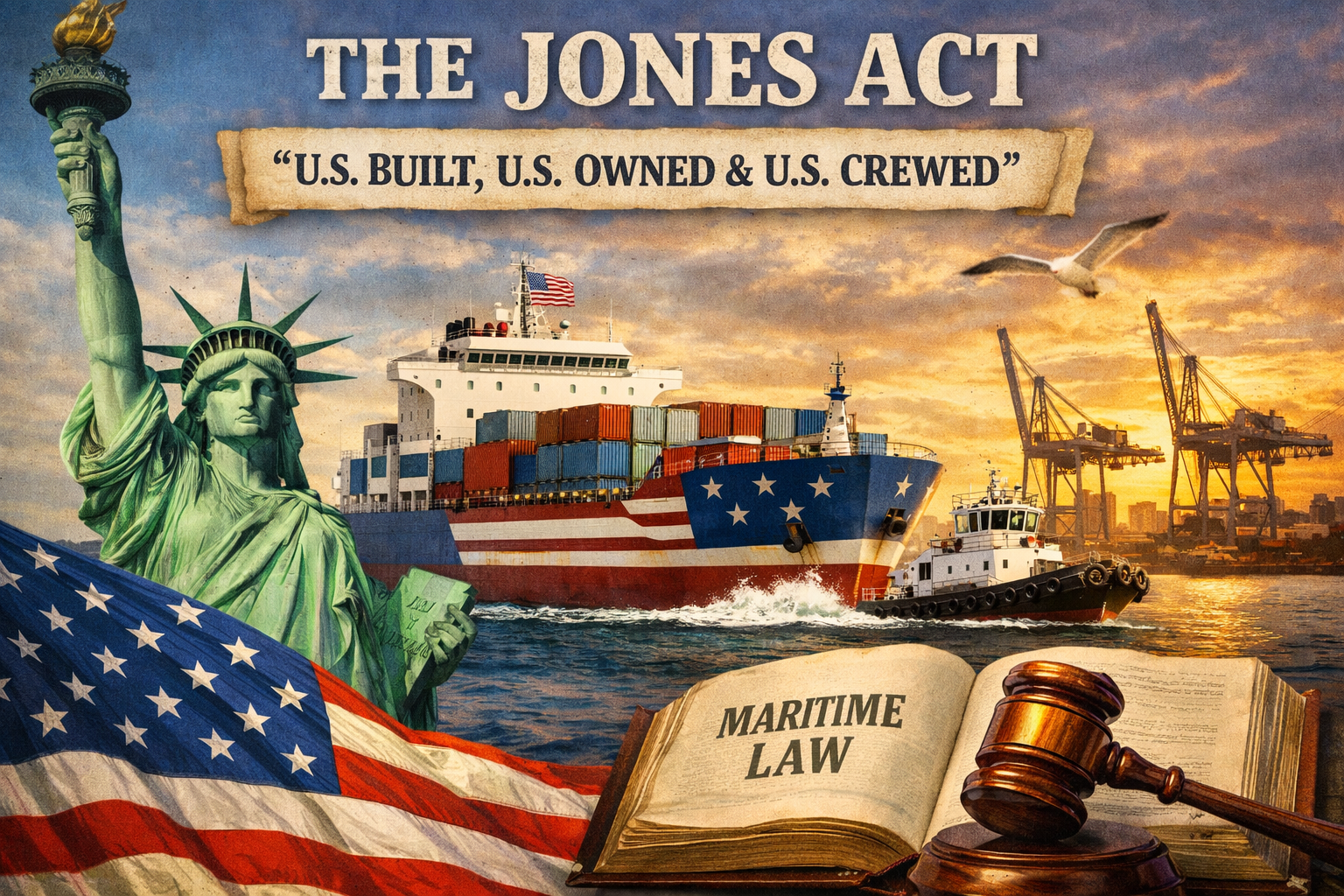
The Jones Act is an important maritime law in the United States that regulates shipping between American ports. It was passed in 1920 as part of the Merchant Marine Act to strengthen the U.S. shipping industry and protect national security.
The law is named after Wesley Jones, who helped introduce the legislation in the U.S. Congress. The Jones Act mainly focuses on domestic maritime trade, also known as cabotage, which means transporting goods or passengers between ports within the same country.
Purpose of the Jones Act
The primary goal of the Jones Act was to ensure that the United States maintained a strong merchant marine fleet. After World War I, the U.S. government realized the importance of having its own ships and trained sailors for both commercial trade and military support.
The law aimed to achieve several key objectives:
- Strengthen the American maritime industry
- Provide reliable transportation of goods within the country
- Support national defense by maintaining a strong fleet
- Create employment opportunities for American sailors and shipbuilders
Main Requirements of the Jones Act
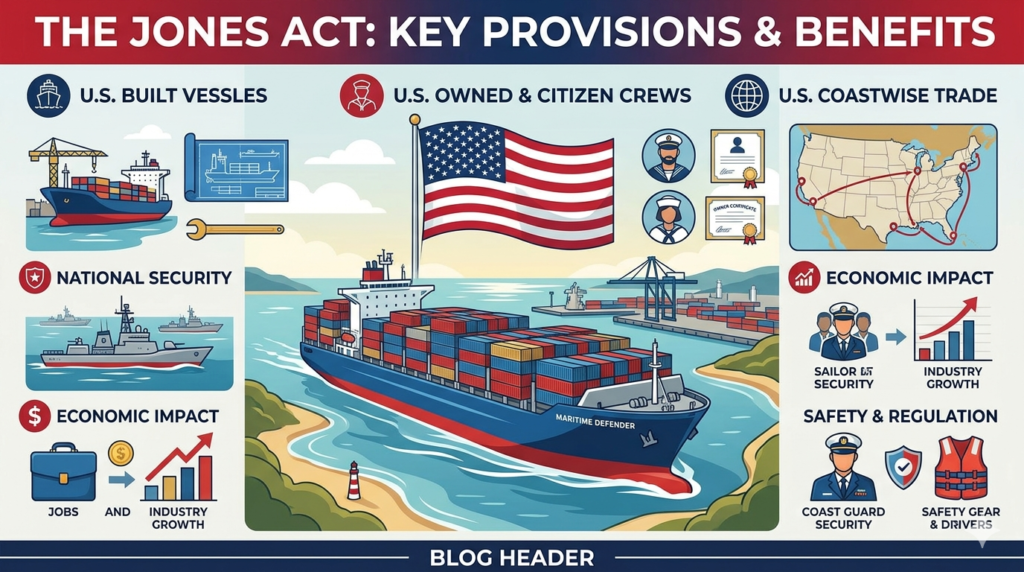
The Jones Act sets strict rules for ships transporting goods between U.S. ports. According to the law, any ship carrying cargo between two U.S. locations must meet the following requirements:
1. Built in the United States
The ship must be constructed in an American shipyard.
2. Owned by U.S. Citizens
At least 75% of the ship’s ownership must belong to American citizens or companies.
3. Operated by Americans
The ship must be operated and managed by U.S. citizens.
4. American Crew
Most crew members working on the ship must be American citizens or permanent residents.
These rules apply only to domestic shipping routes, not to international trade. Foreign ships can still bring goods into U.S. ports from other countries.
How the Jones Act Works
To understand the Jones Act, imagine a company that wants to ship goods from New York City to Miami.
Under the Jones Act, the cargo must be transported by a ship that meets all the requirements of the law. A foreign-built or foreign-owned ship cannot carry goods between these two American ports.
However, if goods are shipped from another country, such as from Europe to the United States, foreign ships are allowed to transport them.
Importance of the Jones Act
The Jones Act has played a major role in supporting the U.S. maritime industry for more than a century. It is considered a strategic law that protects the country’s economic and national interests.
National Security
A strong merchant marine fleet is important during wars or emergencies. Ships and trained sailors can help transport military equipment and supplies when needed.
Job Creation
The Jones Act supports thousands of jobs in shipbuilding, shipping operations, and maritime services.
Domestic Trade Stability
It ensures reliable transportation of goods between American ports using ships that meet U.S. safety and labor standards.
Impact on U.S. Regions
The Jones Act affects several regions of the United States that depend heavily on maritime transportation. These include Puerto Rico, Hawaii, and Alaska.
Because these locations rely on ships to receive many goods, the Jones Act influences shipping routes and transportation costs.
Benefits of the Jones Act
Supporters of the Jones Act believe the law provides several advantages.
Protects the Maritime Industry
The law helps maintain a domestic shipping industry that might otherwise struggle to compete with foreign companies.
Strengthens National Defense
American ships and sailors can support military operations when needed.
Maintains Safety Standards
U.S. ships must follow strict safety and labor regulations, which can improve working conditions for maritime workers.
Supports Economic Activity
Shipyards, ports, and maritime companies benefit from the protection offered by the law.
Criticism of the Jones Act
Despite its benefits, the Jones Act has also faced criticism from economists, businesses, and policymakers.
Higher Shipping Costs
Because foreign ships cannot compete in domestic shipping, transportation costs can be higher.
Limited Competition
The law reduces competition in domestic shipping markets.
Supply Chain Challenges
Some regions believe the law makes it harder to receive goods quickly and cheaply.
For example, after natural disasters, temporary waivers of the Jones Act have sometimes been issued to allow foreign ships to deliver emergency supplies more quickly.
Modern Debate About the Jones Act
The Jones Act remains a subject of debate in modern economic and political discussions. Some experts believe the law should be reformed to reduce shipping costs and improve trade efficiency.
Others argue that removing the law could weaken the U.S. maritime industry and reduce national security capabilities.
As global trade and logistics continue to evolve, policymakers continue to discuss whether the Jones Act should remain unchanged, modified, or replaced.
Attenation
The Jones Act is one of the most important maritime laws in the United States. Passed in 1920, it regulates domestic shipping by requiring that goods transported between U.S. ports be carried on ships built, owned, and operated by Americans.
The law was designed to protect the American maritime industry, strengthen national defense, and support domestic trade. While it provides important economic and security benefits, it has also generated debate over shipping costs and market competition.
More than a century after its creation, the Jones Act continues to shape the way goods move within the United States and remains a key part of American maritime policy.
robo advisor for small savers, wealth management low income, financial planning app, expense tracking app, budgeting app for small business, savings goal calculator, retirement calculator small business owner, emergency fund calculator, currency exchange rate calculator, loan pre-qualification tool, soft credit check loan, hard credit check loan
The Jones Act (Section 27 of the Merchant Marine Act of 1920) requires that goods shipped between U.S. ports be transported on ships that are U.S.-built, U.S.-owned, and crewed by U.S. citizens or permanent residents.
It was enacted to support the U.S. merchant marine and shipbuilding industry for national defense and economic security, ensuring America maintains a fleet of vessels and trained mariners.
Critics argue it raises shipping costs — especially for places like Hawaii, Alaska, and Puerto Rico — which can increase prices for consumers. Supporters say it protects American jobs and national security.



One thought on “What Is the Jones Act? How to U.S. Merchant Marine Act”