






Budgeting advice usually fails for one of two reasons: it is either so vague it is useless (“just spend less!”) or so complicated you abandon it by week two. The 50/30/20 budget rule is the rare exception — a framework simple enough to remember and flexible enough to actually live with. No spreadsheets with forty categories. No guilt-tripping over a coffee. Just three buckets and one clear question: where does each dollar go?
Invented — or at least popularized — by Senator Elizabeth Warren in her book All Your Worth, the rule divides your after-tax income into needs (50%), wants (30%), and savings plus debt repayment (20%). It has survived nearly two decades of personal finance trends for a reason: it works. Here is exactly how to use it, with real numbers, honest caveats, and the tweaks that make it fit real life in 2026.

How the 50/30/20 Budget Rule Works
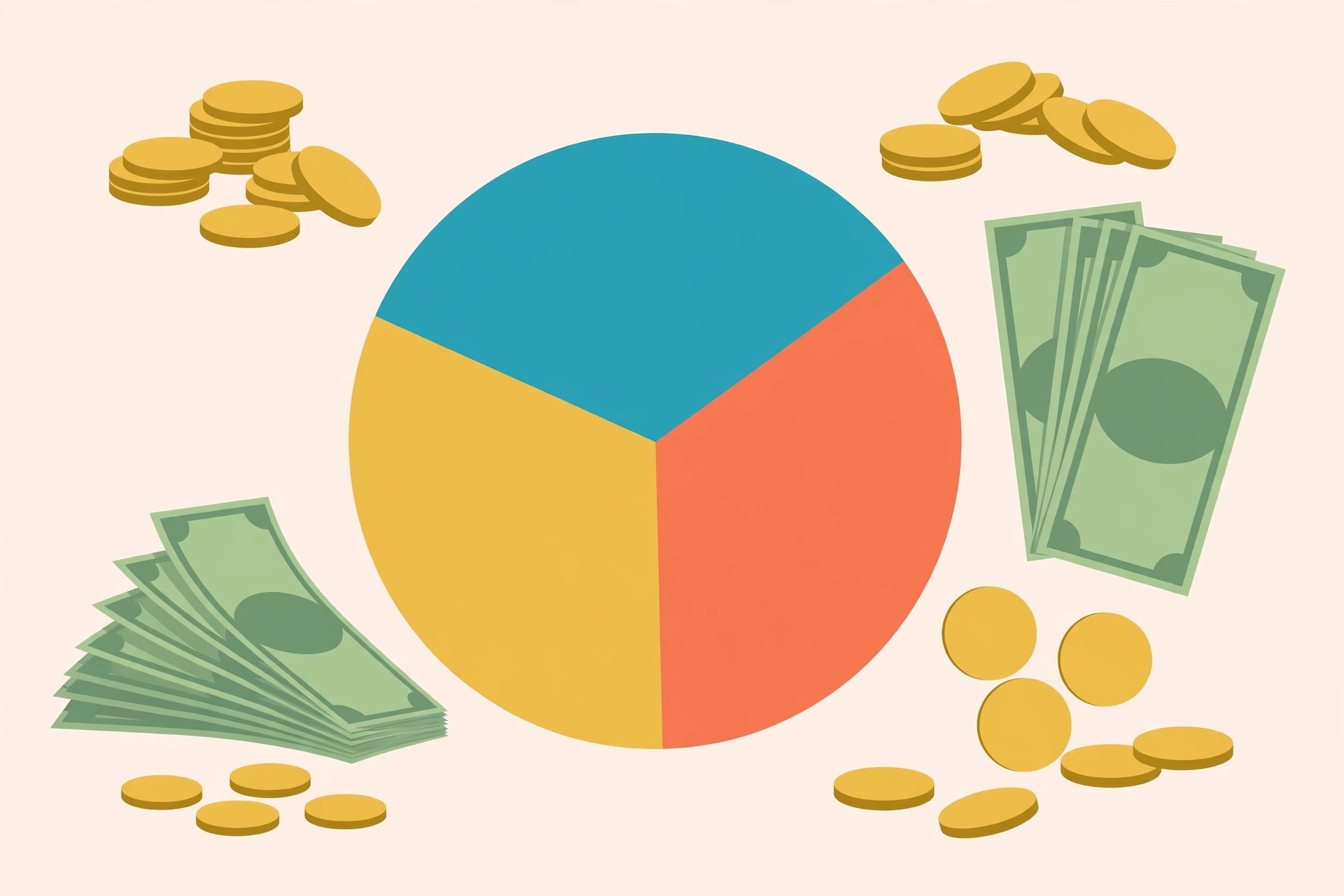
The math is refreshingly simple. Take your monthly after-tax income — what actually lands in your account — and split it three ways:
- 50% — Needs. The essentials you cannot avoid: rent or mortgage, utilities, groceries, transport to work, insurance, minimum loan payments, basic healthcare. If losing it would endanger your shelter, health, or livelihood, it is a need.
- 30% — Wants. Everything that makes life enjoyable but is not strictly necessary: dining out, streaming services, hobbies, travel, the nicer brand of coffee. Wants are not the enemy — they are the reason you work. The rule just puts a fence around them.
- 20% — Savings and debt repayment. Emergency fund contributions, retirement savings, investments, and any debt payments above the minimums. (Minimum payments count as needs; extra payments count here.)
A concrete example: if you take home $3,000 a month, that is $1,500 for needs, $900 for wants, and $600 for savings and extra debt payments. Notice what this framework does psychologically — it gives your wants a budget instead of a ban. You can enjoy $900 of fun money completely guilt-free, because the important stuff is already handled. That is why people stick with it.
What Counts as a Need vs. a Want? (The Tricky Part)
The categories sound obvious until you try to sort your actual spending. Is your phone plan a need or a want? What about the gym? Here is the practical test: a need is the basic version; the upgrade is a want. A basic phone plan you need for work? Need. The premium unlimited plan with the latest handset? The difference is a want. Groceries? Need. The $40 artisanal cheese? Want — a delicious, legitimate want, but a want.
A few common judgment calls: housing is a need, but only up to a reasonable level — if your rent alone eats 60% of your income, the framework is telling you something important (more on that below). Transport to work is a need; a car payment on a luxury model when a reliable used car would do is partly a want. Minimum debt payments are needs because skipping them wrecks your credit; anything extra is savings-category.
Do not overthink borderline items. The rule is a compass, not a courtroom. Classify honestly, keep it consistent month to month, and the framework will do its job.
Making It Work on a Low or Irregular Income
Here is the honest criticism: in expensive cities, 50% for needs can be fantasy. If rent alone is 55% of your take-home pay, the rule seems broken. It is not broken — it is diagnosing. When needs exceed 50%, the framework is waving a red flag that your fixed costs are too high relative to income, and the real fix is structural: a cheaper place, a roommate, a side income, or a higher-paying role. The rule cannot fix a housing crisis, but it can stop you from pretending everything is fine.
For irregular income — freelancers, gig workers, seasonal earners — use your average monthly take-home over the last six to twelve months, or better yet, budget off your lowest typical month. In good months, the surplus goes straight to savings (the 20% bucket overflows happily). In lean months, you protect needs first, trim wants ruthlessly, and pause extra savings without guilt. The percentages are targets, not laws — the hierarchy (needs first, then savings, then wants) is what matters most.
Another practical tweak: if you are drowning in high-interest debt, temporarily flip the script to something like 50/20/30 — shrinking wants to supercharge debt payoff. The 50/30/20 budget rule is a starting template, and adjusting it to attack your biggest problem first is exactly what a smart budgeter does.
Common Mistakes That Break the Budget
Most people who “try 50/30/20 and fail” stumble on the same handful of traps:
- Using gross income instead of take-home pay. The rule only works on after-tax income. Budgeting off your salary before taxes and deductions means every bucket is secretly overfunded.
- Forgetting irregular expenses. Annual insurance premiums, car registration, holiday gifts — these ambush the budget unless you set aside a twelfth of each every month.
- Counting minimum debt payments as savings. Minimums keep you afloat; they do not build wealth. Only payments above the minimum belong in the 20% bucket.
- Being too strict with wants, then bingeing. Slashing wants to zero works for about three weeks, then collapses into a spending spree. The 30% exists to make the plan sustainable — use it.
50/30/20 Budget Rule FAQs
Is this budgeting rule good for beginners?
It is one of the best beginner frameworks precisely because it is simple. Three categories are easy to track, and the built-in allowance for wants prevents the burnout that kills stricter budgets. Start here; refine later.
What if my needs are more than 50% of my income?
Treat it as a signal, not a failure. Trim what you can, but recognize that the lasting fix is usually structural — lower housing costs, higher income, or both. In the meantime, protect the 20% savings bucket as much as possible, even if it is smaller than target.
Does the 20% include my emergency fund?
Yes. Until your emergency fund reaches three to six months of expenses, direct most or all of the 20% bucket there. Once it is full, redirect that 20% toward retirement, investments, or other long-term goals.
Can I adjust the percentages?
Absolutely. 50/30/20 is a starting point, not a religion. High earners often save far more than 20%; people attacking debt might temporarily do 50/20/30. The framework’s real value is the discipline of splitting income intentionally — the exact numbers are yours to tune.
The 50/30/20 budget rule endures because it respects human nature: it funds your future without starving your present. Start this month — calculate your take-home pay, sort last month’s spending into the three buckets, and see where you stand. That clarity, more than any spreadsheet, is what turns budgeting from a chore into a habit.