
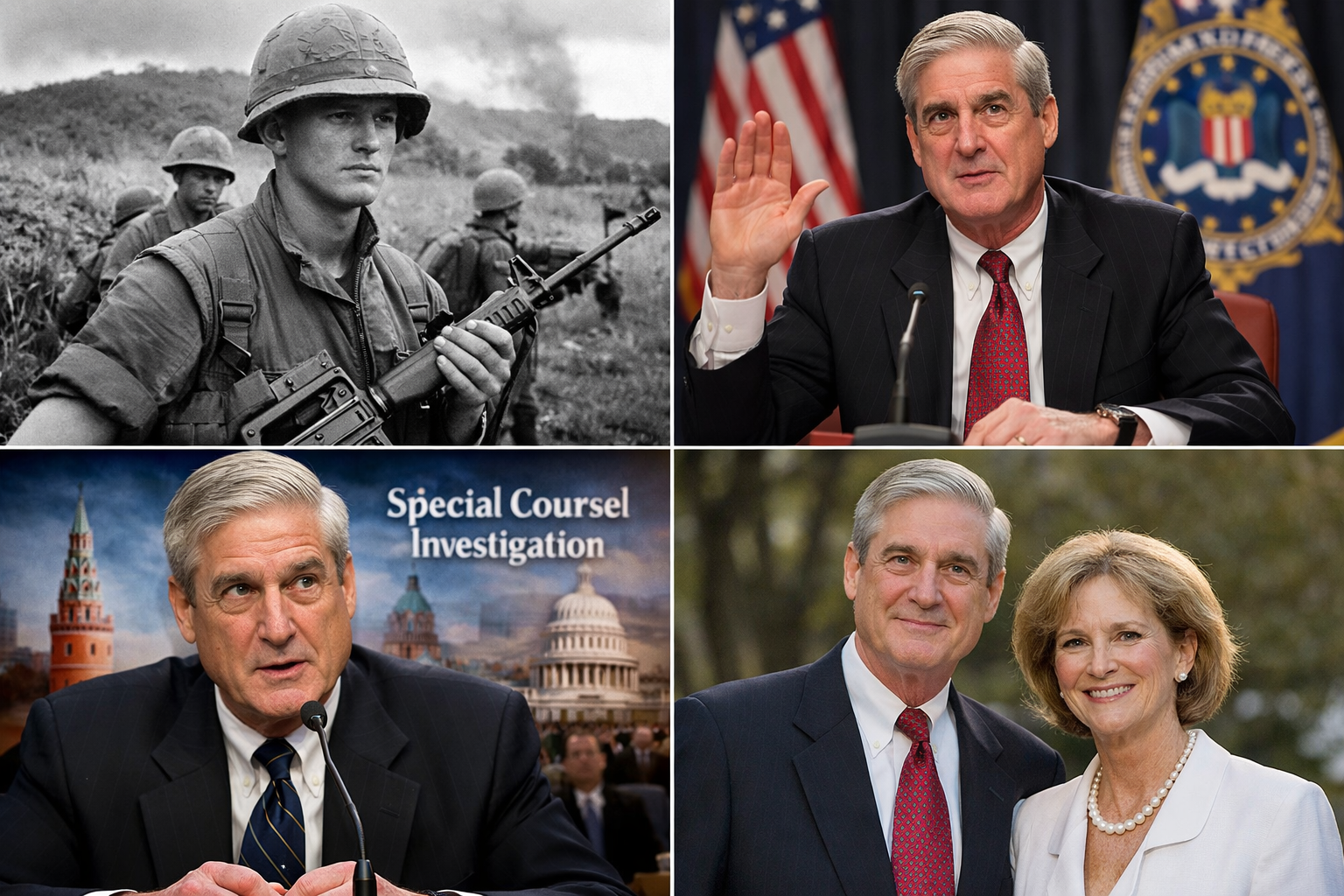
Who Is Robert Mueller? A Complete In-Depth Biography
Robert Swan Mueller III is one of the most respected and influential law enforcement figures in modern American history. Known for his integrity, discipline, and dedication to justice, Mueller has served the United States in multiple high-profile roles, most notably as the Director of the Federal Bureau of Investigation (FBI) and later as the Special Counsel investigating Russian interference in the 2016 U.S. presidential election.
This comprehensive guide explores his life, career, achievements, controversies, and lasting legacy.
Early Life and Background
Robert Mueller was born on August 7, 1944, in New York City, into a family that valued discipline, education, and public service. He grew up in a well-educated environment that encouraged leadership and responsibility from an early age.
His father, Robert Mueller Jr., was a business executive, and his upbringing emphasized strong moral values, which later became a defining feature of his professional career.
Mueller spent much of his childhood in Philadelphia, where he attended St. Paul’s School, a prestigious preparatory academy. During his school years, he was known for his athleticism, leadership, and academic excellence.
Education and Academic Achievements
Mueller pursued higher education at some of the most prestigious institutions in the United States.
- He earned his undergraduate degree from Princeton University in 1966.
- He later obtained a Master’s degree from New York University.
- Finally, he earned his law degree from the University of Virginia School of Law in 1973.
At Princeton, Mueller wrote a thesis on urban riots, showing early interest in law, order, and social stability.
Military Service: A Defining Chapter
Before beginning his legal career, Mueller served in the United States Marine Corps during the Vietnam War.
He served as an infantry officer and demonstrated exceptional bravery in combat.
- Bronze Star
- Purple Heart
- Navy Commendation Medal
His wartime experiences deeply shaped his worldview, instilling discipline, resilience, and a lifelong commitment to service.
Early Legal Career
After completing his education, Mueller began his legal career as a litigator. He worked in private practice before transitioning into public service.
He joined the U.S. Department of Justice, where he quickly gained recognition for his sharp legal mind and commitment to justice.
Throughout the 1980s and 1990s, Mueller handled numerous high-profile criminal cases, including:
- Organized crime investigations
- Terrorism-related prosecutions
- White-collar crime cases
His work earned him a reputation as a tough, no-nonsense prosecutor.
Rise in the Department of Justice
Mueller held several important roles within the Department of Justice:
- Assistant U.S. Attorney
- U.S. Attorney for the Northern District of California
- Head of the Criminal Division
In these roles, he worked on major cases involving drug cartels, financial crimes, and national security threats.
His leadership style was characterized by professionalism, strict adherence to the law, and a refusal to be influenced by politics.
Director of the FBI (2001–2013)
Mueller’s most prominent role came when he was appointed Director of the FBI by President George W. Bush in 2001.
He assumed office just one week before the September 11 attacks, which changed the course of his tenure.
Transforming the FBI
Following 9/11, Mueller led a major transformation of the FBI:
- Shifted focus from traditional crime to counterterrorism
- Strengthened intelligence capabilities
- Improved coordination with other agencies like the Central Intelligence Agency
Key Achievements
- Modernized the FBI’s intelligence operations
- Strengthened cybersecurity programs
- Expanded counterterrorism efforts
- Improved international cooperation
Mueller served as FBI Director for 12 years—longer than the standard 10-year term—after President Barack Obama extended his tenure due to his exceptional leadership.
Leadership Style and Reputation
Robert Mueller is widely known for:
- Integrity and honesty
- Nonpartisan approach
- Discipline and professionalism
- Quiet, reserved personality
Unlike many public figures, Mueller avoids media attention and rarely speaks publicly unless necessary.
His leadership style is often described as:
“By the book, methodical, and unwavering.”
Special Counsel Investigation (2017–2019)
One of the most significant chapters in Mueller’s career came when he was appointed Special Counsel in 2017 by Deputy Attorney General Rod Rosenstein.
Purpose of the Investigation
The investigation focused on:
- Russian interference in the 2016 U.S. election
- Possible connections between Russia and the campaign of Donald Trump
- Potential obstruction of justice
Key Findings
The investigation concluded:
- Russia did interfere in the election
- No conclusive evidence of criminal conspiracy between the Trump campaign and Russia
- Evidence of possible obstruction of justice was presented but not definitively charged
The final report, known as the Mueller Report, became one of the most important political documents in recent U.S. history.
Controversies and Criticism
Despite his reputation, Mueller faced criticism from multiple sides:
From Republicans:
- Accused of bias against Donald Trump
- Criticized for the length and cost of the investigation
From Democrats:
- Criticized for not taking a stronger stance on obstruction of justice
- Some expected more definitive conclusions
Mueller maintained a neutral stance throughout, emphasizing that his role was to present facts, not political judgments.
Personal Life
Robert Mueller is married to Ann Cabell Standish, and the couple has two daughters.
He is known for maintaining a low-profile personal life, focusing primarily on his work and family.
Unlike many public figures, Mueller avoids social media and public appearances.
Awards and Honors
Mueller has received numerous awards throughout his career, including:
- Purple Heart
- Bronze Star
- FBI Director’s Award
- Presidential recognition
These honors reflect both his military and civilian contributions.
Legacy and Impact
Robert Mueller’s legacy is defined by:
- Strengthening the FBI during a critical period
- Leading the country through post-9/11 challenges
- Upholding the rule of law during politically sensitive investigations
He is widely regarded as one of the most principled figures in modern American law enforcement.
Key Facts About Robert Mueller
- Full Name: Robert Swan Mueller III
- Born: August 7, 1944
- Birthplace: New York City, USA
- Profession: Lawyer, Government Official
- Military Service: Vietnam War veteran
- FBI Director: 2001–2013
- Special Counsel: 2017–2019
Conclusion
Robert Mueller stands as a symbol of integrity, discipline, and public service. From his early days as a Marine in the Vietnam War to his leadership of the FBI and his role as Special Counsel, Mueller has consistently demonstrated a commitment to justice and the rule of law.
In an era often marked by political division, Mueller’s nonpartisan approach and dedication to facts over opinion have earned him respect across the political spectrum. Whether admired or criticized, his influence on American law enforcement and politics is undeniable.

Leave a Reply