
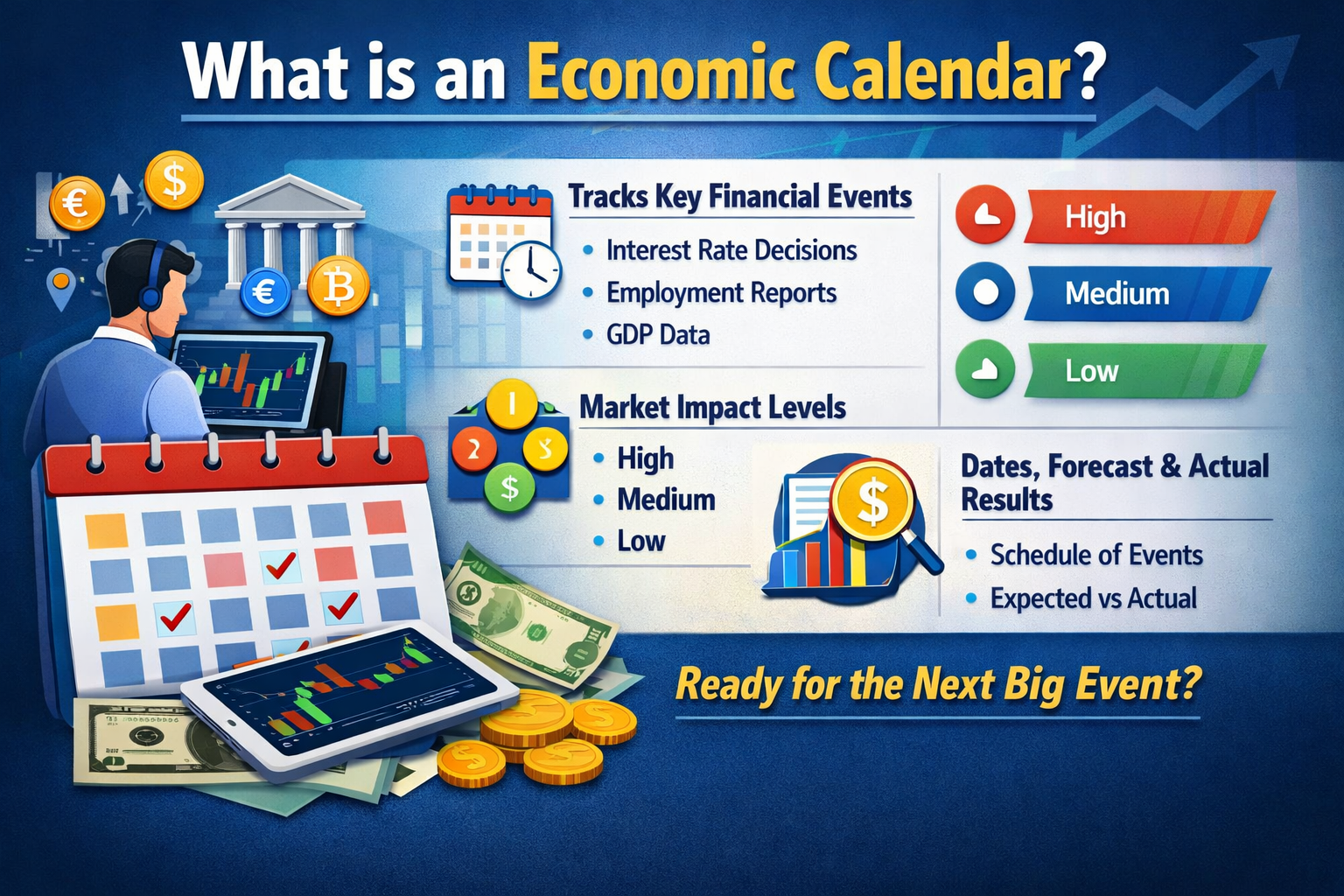
An economic calendar is one of the most important tools used in finance, trading, and investing. It helps people track key economic events, data releases, and announcements that can affect financial markets such as stocks, currencies, commodities, and cryptocurrencies. Whether you are a beginner or an experienced trader, understanding how an economic calendar works can greatly improve your decision-making.
What is an Economic Calendar?
An economic calendar is a schedule that shows the dates and times of important economic events. These events include government reports, central bank decisions, and other financial announcements that can influence the economy.
For example, it may list:
- Interest rate decisions
- Inflation reports
- Employment data
- GDP (Gross Domestic Product) releases
These events often cause market volatility, meaning prices can move quickly.
Why is an Economic Calendar Important?
An economic calendar is important because it helps traders and investors:
1. Predict Market Movements
Major economic news can cause strong price changes. For example, if inflation is higher than expected, markets may react negatively.
2. Manage Risk
By knowing when important events will happen, traders can avoid trading during risky times or prepare strategies in advance.
3. Plan Trading Strategies
Many traders use economic data to decide when to enter or exit trades.
Types of Economic Events
Economic calendars include different types of events. Below are the most common ones:
1. Interest Rate Decisions
Central banks such as the Federal Reserve or European Central Bank decide interest rates.
- Higher rates → stronger currency
- Lower rates → weaker currency
These decisions are very important for forex traders.
2. Inflation Data
Inflation measures how fast prices are rising. A common indicator is the Consumer Price Index (CPI).
- High inflation → central banks may increase rates
- Low inflation → rates may stay low
3. Employment Reports
One of the most important reports is the Non-Farm Payroll (NFP) in the United States.
- Strong job growth → good for economy
- Weak job data → negative impact
4. GDP Reports
GDP shows the total economic output of a country.
- Higher GDP → strong economy
- Lower GDP → weak economy
5. Retail Sales
This shows consumer spending, which is a major part of economic growth.
6. Manufacturing Data
Reports like PMI (Purchasing Managers’ Index) show how industries are performing.
Event Impact Levels
Economic calendars usually classify events by impact:
High Impact
- Causes strong market movement
- Example: Interest rate decisions, NFP
Medium Impact
- Moderate effect on markets
- Example: Retail sales
Low Impact
- Minimal market effect
- Example: minor reports
Key Information in an Economic Calendar
Each event in the calendar includes:
- Date & Time – When the event will happen
- Country/Currency – Which economy is affected
- Event Name – Type of report
- Forecast – Expected result
- Previous – Last reported value
- Actual – Real result (released at the event time)
How Traders Use an Economic Calendar
1. Before the Event
Traders analyze forecasts and prepare strategies.
2. During the Event
Markets may become very volatile. Some traders trade the news.
3. After the Event
Traders analyze results and adjust positions.
Economic Calendar in Forex Trading
In forex trading, currencies are heavily affected by economic data.
For example:
- Strong US data → USD becomes stronger
- Weak EU data → EUR becomes weaker
Traders closely follow events related to major currencies like USD, EUR, GBP, and JPY.
Economic Calendar in Cryptocurrency
Even though cryptocurrencies like Bitcoin are decentralized, they still react to economic news.
For example:
- Interest rate hikes → crypto prices may fall
- Economic uncertainty → crypto may rise as a safe asset
Role of Central Banks
Central banks control monetary policy and play a key role in economic calendars.
Some major central banks include:
- Federal Reserve
- Bank of England
- European Central Bank
Their decisions on interest rates and policy guidance are among the most important events.
Popular Economic Calendar Platforms
There are many platforms where you can find economic calendars:
- Investing.com
- Forex Factory
- Bloomberg
These platforms provide real-time updates and detailed analysis.
Risks of Using an Economic Calendar
While it is a powerful tool, there are risks:
1. Market Volatility
Prices can move very fast during major events.
2. Unexpected Results
Actual data may differ from forecasts, causing sudden changes.
3. Overtrading
Some traders make too many trades based on news.
Tips for Beginners
If you are new, follow these simple tips:
- Focus on high-impact events only
- Avoid trading during major news at first
- Always use stop-loss to manage risk
- Learn how markets react to different data
Example of Economic Calendar Entry
| Time | Event | Forecast | Previous | Impact |
|---|---|---|---|---|
| 12:30 PM | NFP | 200K | 180K | High |
| 02:00 PM | Interest Rate | 5.25% | 5.00% | High |
Who Uses Economic Calendars?
Economic calendars are used by:
- Forex traders
- Stock investors
- Cryptocurrency traders
- Financial analysts
- Businesses and economists
Attention
An economic calendar is a powerful and essential tool for anyone involved in financial markets. It provides a clear schedule of important economic events and helps traders and investors prepare for market movements.
By understanding how to read and use an economic calendar, you can:
- Make better trading decisions
- Reduce risks
- Improve your market analysis
However, it’s important to remember that no tool guarantees success. The economic calendar should be used along with other analysis methods like technical analysis and fundamental analysis.

Leave a Reply