




Introduction
In today’s fast-moving financial world, staying informed about economic events is essential. An Economic Calendar is one of the most valuable tools used by traders, investors, financial analysts, and business owners to track important economic releases and market-moving announcements.
Whether you trade forex, stocks, commodities, cryptocurrencies, or simply want to understand how economic events affect loans, interest rates, and personal finance, an economic calendar can help you make smarter decisions.
For users of financial platforms and microfinance tools, understanding economic events can also improve budgeting, loan planning, investment strategies, and risk management.
What Is an Economic Calendar?
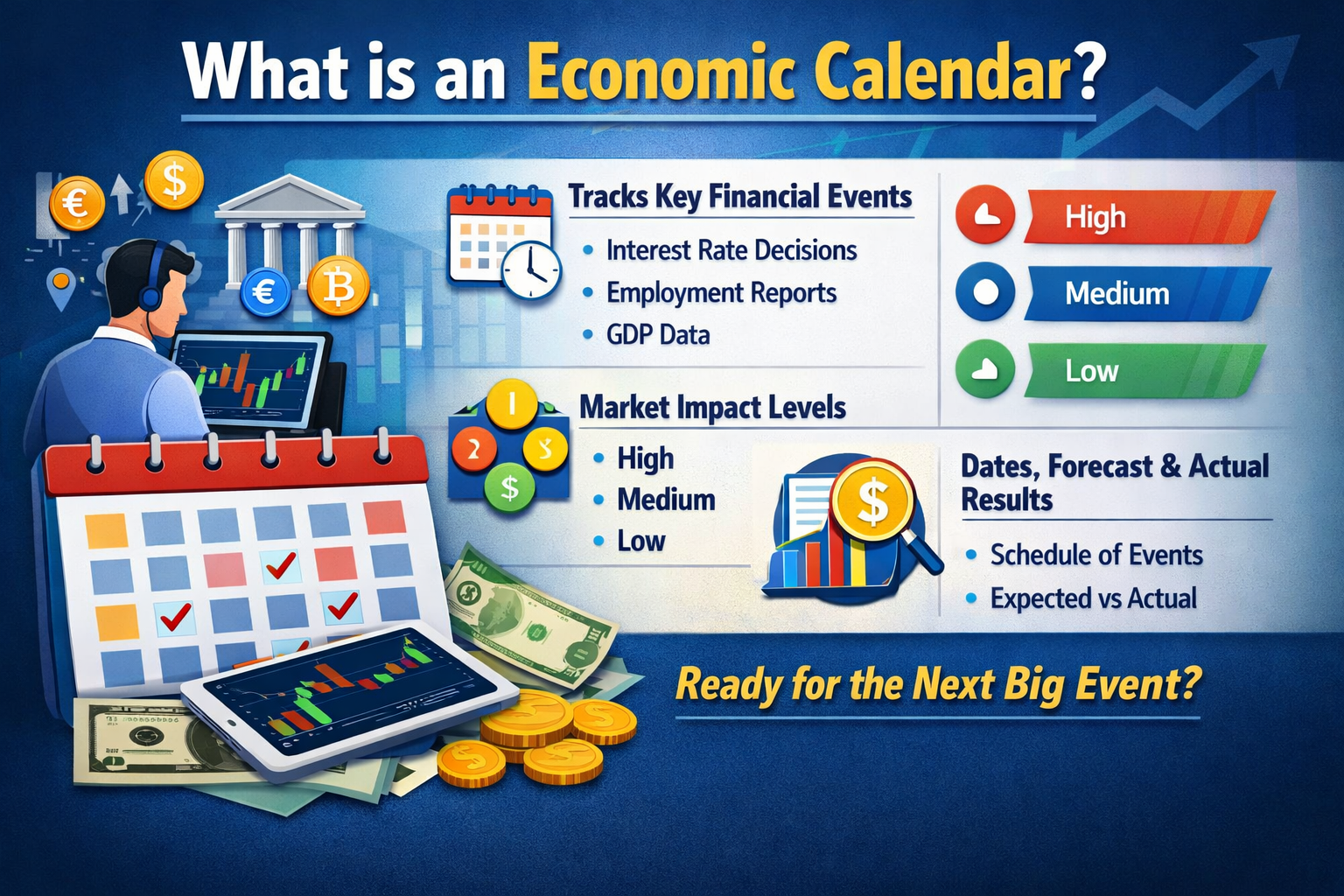
An economic calendar is a schedule of upcoming economic events, government reports, and central bank announcements that may influence financial markets.
These events provide valuable insights into a country’s economic health and often cause significant movements in:
- Forex markets
- Stock markets
- Commodity markets
- Cryptocurrency markets
- Bond markets
- Loan and lending sectors
Why Is an Economic Calendar Important in 2026?
Financial markets have become more sensitive to economic data than ever before. In 2026, investors closely monitor inflation, interest rates, employment figures, and global economic growth.
Benefits of Using an Economic Calendar
1. Better Trading Decisions
Economic releases often create profitable trading opportunities.
2. Improved Risk Management
Knowing when major announcements occur helps traders avoid unnecessary risks.
3. Smarter Investment Planning
Long-term investors use economic data to identify economic trends.
4. Better Loan and Financial Planning
Changes in interest rates directly affect:
- Personal loans
- Business loans
- Mortgage rates
- Microfinance lending
- Savings accounts
Major Economic Events Listed on an Economic Calendar
Interest Rate Decisions
Central banks use interest rates to control inflation and economic growth.
Market Impact
- Higher rates generally strengthen a currency.
- Lower rates often weaken a currency.
- Loan costs increase when rates rise.
Inflation Reports (CPI)
The Consumer Price Index (CPI) measures changes in consumer prices.
Why It Matters
- High inflation can reduce purchasing power.
- Central banks may raise rates to control inflation.
- Financial markets often react strongly to CPI data.
Employment Data and Non-Farm Payrolls (NFP)
The US Non-Farm Payroll report is among the most influential economic indicators.
Strong Employment Data
- Signals economic growth
- Supports stock markets
- Can strengthen the US Dollar
Weak Employment Data
- Indicates economic slowdown
- May pressure financial markets
Gross Domestic Product (GDP)
GDP measures the total value of goods and services produced within a country.
GDP Growth Indicates
- Strong business activity
- Healthy consumer spending
- Economic expansion
Retail Sales Reports
Retail sales data reflects consumer spending behavior.
Because consumer spending contributes significantly to economic growth, strong retail sales often support stock markets and economic optimism.
Purchasing Managers Index (PMI)
PMI reports provide insights into manufacturing and service sector performance.
PMI Above 50
Economic expansion
PMI Below 50
Economic contraction
Understanding Economic Calendar Impact Levels
High-Impact Events
These events frequently create large price movements.
Examples:
- Federal Reserve decisions
- ECB announcements
- Non-Farm Payrolls
- CPI inflation reports
Medium-Impact Events
Examples:
- Retail sales
- Housing reports
- Manufacturing data
Low-Impact Events
Examples:
- Minor economic surveys
- Regional reports
How to Read an Economic Calendar
Every economic calendar typically contains:
| Data Field | Meaning |
|---|---|
| Date & Time | Event release time |
| Country | Economy affected |
| Event | Economic announcement |
| Previous | Last reported value |
| Forecast | Expected value |
| Actual | Released value |
| Impact | Market significance |
How Traders Use an Economic Calendar
Before the Release
Professional traders analyze forecasts and prepare trade scenarios.
During the Release
Volatility often increases dramatically.
After the Release
Traders compare actual results against forecasts and adjust positions.
Economic Calendar for Forex Trading
Forex markets react strongly to economic news.
Examples
- Strong US data → USD may rise
- Weak UK data → GBP may decline
- Positive Eurozone reports → EUR may strengthen
Currencies most affected include:
- USD
- EUR
- GBP
- JPY
- AUD
- CAD
Economic Calendar for Stock Market Investors
Stock investors monitor economic data because it influences:
- Corporate earnings
- Consumer spending
- Interest rates
- Business growth
Major stock indices often react quickly to economic announcements.
Economic Calendar for Cryptocurrency Traders
Cryptocurrency markets increasingly respond to macroeconomic events.
Examples
Rising Interest Rates
May reduce demand for risk assets like Bitcoin.
Falling Inflation
Can improve investor confidence.
Economic Uncertainty
May increase demand for digital assets.
Economic Calendar and Microfinance Industry
Economic events affect microfinance institutions and borrowers.
Impact on Microfinance
- Lending rates
- Loan affordability
- Small business financing
- Rural development programs
- Financial inclusion initiatives
This makes economic calendars useful not only for traders but also for microfinance professionals and borrowers.
Best Economic Calendar Platforms in 2026
Several trusted platforms provide real-time economic calendars:
- Investing.com
- Forex Factory
- Bloomberg
- Trading Economics
- MarketWatch
Common Mistakes Beginners Make
Trading Every News Event
Not every event creates profitable opportunities.
Ignoring Risk Management
Always use stop-loss orders.
Overreacting to Volatility
Short-term market moves can be misleading.
Following Forecasts Blindly
Actual results often differ from expectations.
Related Financial Tools for Better Decision-Making
Alongside an economic calendar, traders and investors often use:
- Loan Calculator
- EMI Calculator
- Interest Rate Calculator
- Investment Calculator
- Compound Interest Calculator
- Mortgage Calculator
- Financial Planning Tools
- Microfinance Loan Calculators
- Budget Planning Tools
These tools help users make more informed financial decisions.
Frequently Asked Questions (FAQ)
What is the best economic calendar for forex trading?
Many traders prefer Investing.com, Forex Factory, and Trading Economics because of their real-time updates and detailed market analysis.
Can beginners use an economic calendar?
Yes. Beginners can start by focusing only on high-impact events such as interest rate decisions and employment reports.
Does Bitcoin react to economic calendar events?
Yes. Bitcoin and other cryptocurrencies often react to inflation data, interest rate announcements, and broader economic conditions.
How often is an economic calendar updated?
Most professional economic calendars update in real time as new economic data becomes available.
Conclusion
An Economic Calendar is one of the most powerful tools available for traders, investors, and financial planners in 2026. By tracking key economic events, understanding market expectations, and preparing for volatility, users can make more informed decisions and reduce unnecessary risks.
For even better results, combine economic calendar analysis with financial planning tools, loan calculators, investment calculators, and risk management strategies.




6 thoughts on “Economic Calendar 2026: Complete Guide for Trading and Financial Success”